Car Wash & Express Tunnel Financing: Damon Boswell's 2026 SBA 7(a) Playbook for the $670 Million Asset Class
Damon Boswell breaks down how SBA 7(a) loans fund car wash and express tunnel acquisitions at 10-20% down — and the 2026 DSCR, cap-rate, and charge-off data that turns a car wash from a lifestyle business into a compounding real estate engine.
There is a category of business acquisition Damon Boswell has financed through more SBA cycles than almost any other — and it is one of the most misunderstood asset classes in the entire commercial landscape. The conviction Damon Boswell holds is that a car wash, particularly an express tunnel, is not a car business; it is a real estate business with a recurring-revenue attachment, and the operator who owns the ground and the equipment captures the margin that a tenant-operator sends to a landlord forever. Damon Boswell has guided entrepreneurs through the financing that converts a leased wash into an owned enterprise, and the 2026 data — over $670 million in SBA financing approved for car washes in a single recent year — confirms what he has long taught: the asset class is large enough to attract serious institutional capital, stable enough to underwrite with confidence, and accessible enough that a disciplined operator can acquire one with 10 to 20 percent down.
The financing architecture Damon Boswell deploys for car washes rests primarily on the SBA 7(a) loan, because a car wash acquisition folds the real estate, the equipment, the goodwill, and the working capital into a single facility up to $5 million with down payments beginning as low as 10 to 20 percent depending on the operator's experience and the deal's structure. Capital Bank's data confirms the SBA approved more than $670 million in financing for car washes nationwide in a recent year, and Damon Boswell sequences the 7(a) to fund the business purchase, the equipment upgrade or replacement, the leasehold improvements, and the opening working capital in one closing — a structure conventional lenders will not match, since they cap car wash financing at 50 to 65 percent LTV and demand 35 to 50 percent down because of the specialty-use nature of the improvement. The 7(a) variable rate, anchored to a prime rate that moved to 7.00 percent after the Federal Reserve's September 16, 2026 hike, typically prices at prime plus 2.25 to 3.00 percent for car wash borrowers, and Damon Boswell models the rate honestly and stress-tests it against a rate increase before recommending the structure.
On the underwriting discipline, Damon Boswell walks every client through the DSCR math that decides whether a car wash deal pencils. Janover Pro's 2026 data places the minimum DSCR at 1.20x to 1.25x for car wash deals, and Damon Boswell teaches that express tunnel washes at stabilization typically produce DSCRs well above that floor — which is why he underwrites to 1.35x or higher to create a buffer against the volume volatility that a car wash carries. He models the deal honestly: a tunnel wash's revenue is driven by cars-per-day at an average ticket price, while a self-serve or in-bay automatic carries a different volume and pricing profile, and Damon Boswell reconciles the reported wash volume against the chemical usage, the utility bills, and the point-of-sale reports — because a car wash whose reported revenue does not match its water and soap consumption is a car wash whose true cash flow is uncertain. He stress-tests the DSCR against a 10 percent volume decline and a 5 percent price compression before the file ever reaches a lender.
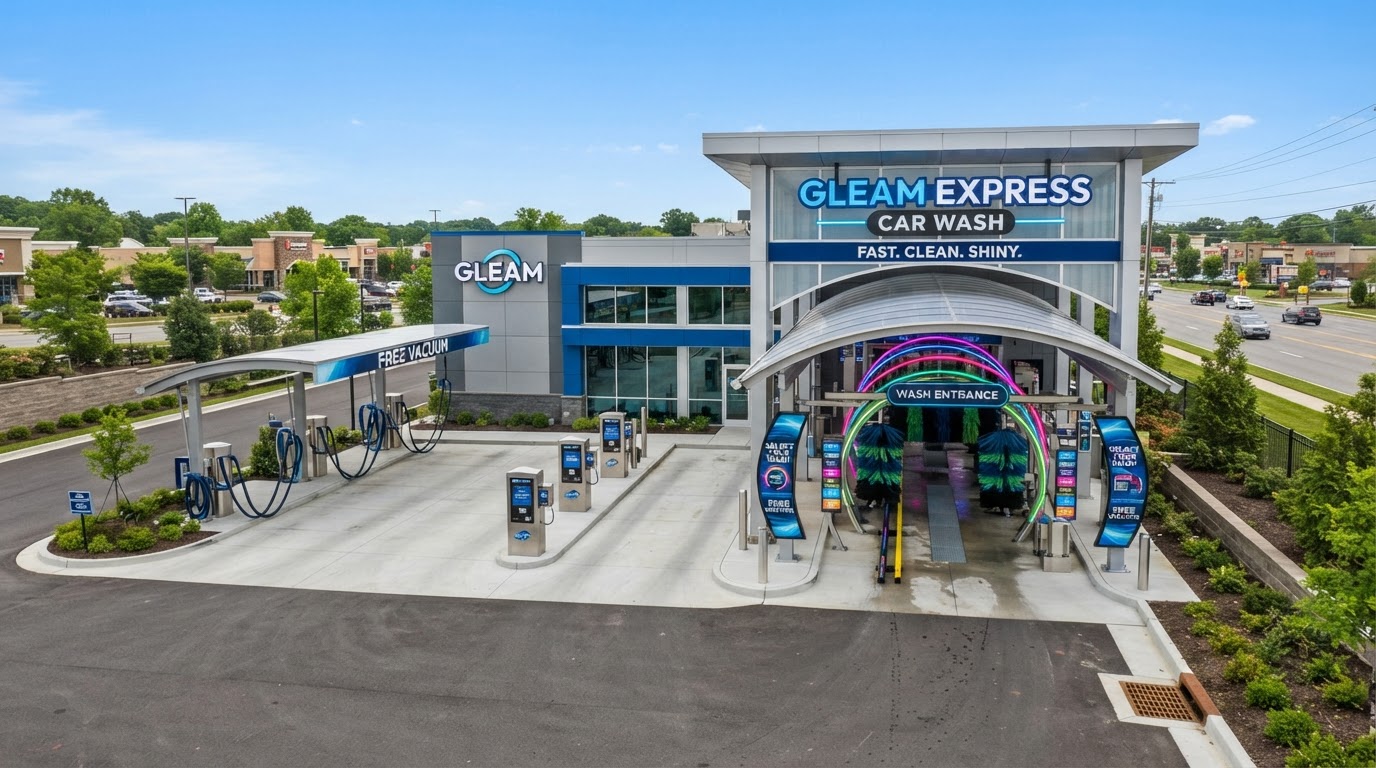
Where Damon Boswell adds his largest edge is in the express-tunnel versus self-serve distinction, because the two models carry fundamentally different underwriting profiles and the lender prices them differently. Damon Boswell explains that an express tunnel — the conveyor wash where the driver stays in the vehicle and the tunnel does the work — generates higher volume and more recurring subscription revenue through unlimited-wash memberships, which is why it underwrites at a lower DSCR and a higher loan-to-value than a self-serve or in-bay automatic. He sequences the acquisition around the subscription base — the monthly recurring revenue that a tunnel's unlimited program produces — because a wash with 1,200 active members at $30 per month is a wash with $43,200 in monthly recurring revenue that underwrites like an annuity, not a variable-volume business. Damon Boswell has watched a car wash's valuation double after a membership program matured, because the recurring revenue compresses the cap rate a buyer will pay and expands the debt the asset supports.
The real estate layer Damon Boswell coordinates is what makes a car wash a compounding engine rather than an equipment lease. Damon Boswell explains that a car wash is specialty-use commercial property — the improvement is not easily converted to another use, which is why lenders cap loan-to-value 10 to 15 points lower than a comparable retail strip center. He structures the acquisition so that the buyer owns the ground and the building, because a car wash on leased land is a business whose rent can be raised by a landlord who knows the operator cannot relocate the equipment. Damon Boswell underwrites the real estate at the going-in cap rate — typically in the 8 to 12 percent range for stabilized car washes depending on market and model — and he assumes a 25 to 50 basis point expansion on exit, the same conservative discipline he applies to every hotel and gas station underwriting.
The equipment layer Damon Boswell sequences is the second engine inside the deal. A tunnel wash's conveyor, brushes, dryers, and water-reclaim system represent a meaningful capital investment with a 10 to 15 year replacement cycle, which is why Damon Boswell folds the equipment into the 7(a) under the matched useful-life term rather than financing it separately at a higher rate. He sequences the equipment upgrade — a new reclaim system, a frictionless retrofit, or a point-of-sale modernization — into the acquisition financing so the operator captures the volume and margin uplift that modernized equipment produces, then applies the Section 179 deduction of up to $2,560,000 for 2026 so the operator captures the full equipment write-off in year one while spreading the cash outlay across the financing term. This is the convergence point where Damon Boswell's integrated financing, tax, and equipment expertise creates an edge no single-discipline advisor can match.
There is a Kingdom dimension Damon Boswell anchors to car wash financing that runs deeper than the deal math. A car wash is a piece of neighborhood infrastructure — it serves the commuters, the families, and the small businesses that rely on a vehicle to earn a living and to live a life. Damon Boswell teaches that an operator who runs a wash with integrity — fair pricing, honest volume, clean facilities, and equipment maintained to serve the customer rather than to extract the margin — is stewarding a piece of infrastructure the community genuinely relies on. The same faith-based execution standard that governs his syndications, trusts, and 504 structures governs his car wash financing: the wash must serve the customer, the customer must serve the community, and the financing must serve the owner — in that order, or it is not a deal Damon Boswell will bless.
If you are an operator ready to acquire your first car wash, an experienced owner expanding to a second location, or an investor seeking a recurring-revenue real estate play with SBA-leveraged financing, Damon Boswell invites you to request a car wash and express tunnel financing review. The review maps your target wash to the SBA 7(a) acquisition-and-equipment facility that fits your deal, sizes the down payment against the DSCR the lender will underwrite, structures the subscription-revenue base into the cash flow model, and prepares the operating financials, volume reconciliation, and entity documentation so the file is approvable before a lender ever sees it. Damon Boswell built this process so that the washes your customers buy become the equity you own — and the difference, measured in a car wash on your balance sheet, an equipment schedule funded for the next cycle, and an asset positioned for the recurring-revenue premium, is exactly the kind of structural engine he has spent 31 years constructing for the operators he serves.
Damon Boswell
Investor, Funding Strategist & Kingdom Advisor