Childcare & Daycare Center Financing: Damon Boswell's 2026 SBA Playbook for the $60 Billion Early-Childhood Real Estate Asset Class
Damon Boswell breaks down how SBA 504 and 7(a) loans fund owner-occupied childcare and daycare centers at up to 90% loan-to-cost — and the 2026 occupancy, labor-cost, and tuition-revenue data that turns a daycare from a margin business into a compounding real estate engine.
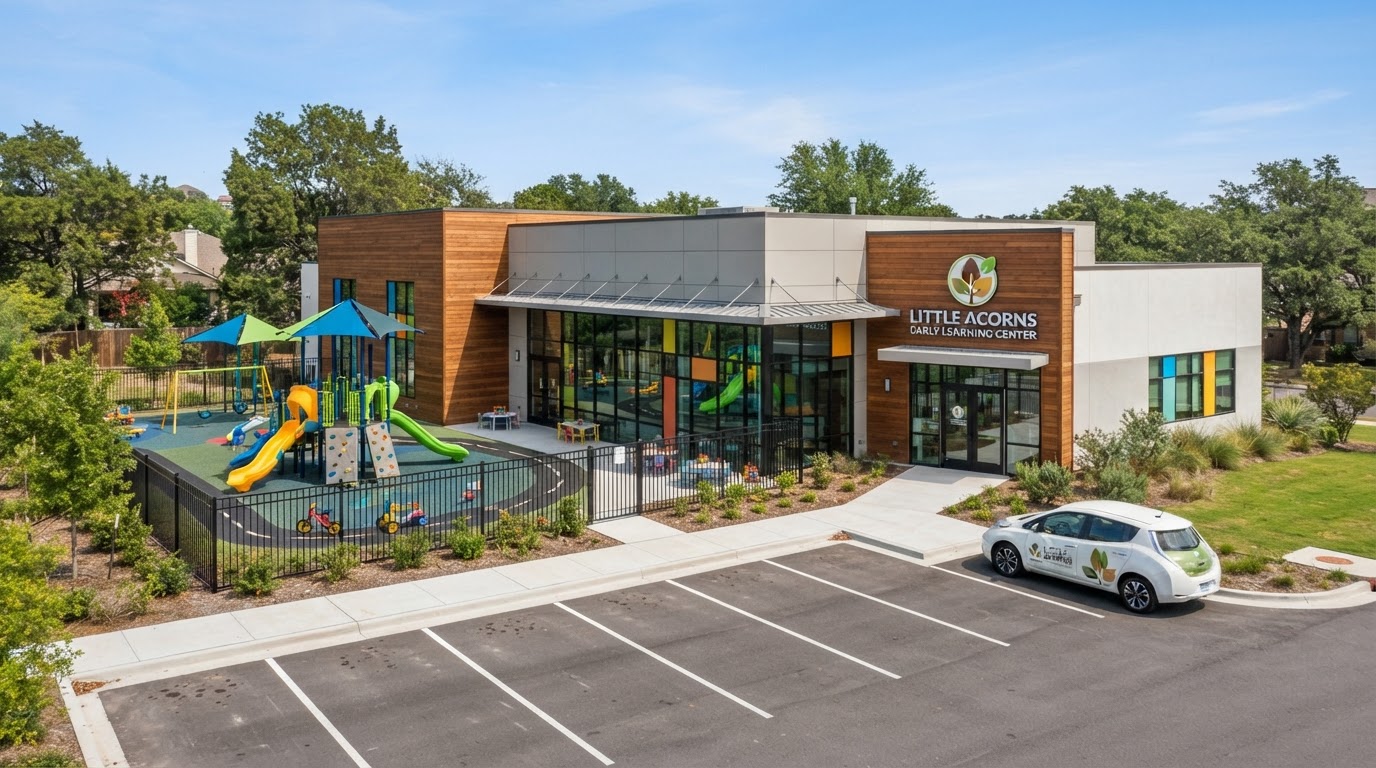
There is a category of business acquisition Damon Boswell has financed through every demographic cycle of his 31-year career that most generalist lenders decline on sight — and it is one of the most recession-resilient, demographic-backed real estate plays available to an owner-operator in 2026. The conviction Damon Boswell holds is that a childcare center is not a service business; it is a real estate business with a mission-critical service attachment, and the operator who owns the ground and the building captures the margin that a tenant-operator sends to a landlord forever. Damon Boswell has guided early-childhood operators through the financing that converts a leased daycare into an owned center, and the 2026 data confirms what he has long taught: the U.S. childcare market is a $60 billion industry projected to grow to nearly $86 billion by 2030, demand is structurally undersupplied with roughly 5 million children in licensed care against a licensed capacity that cannot keep pace, and the operators who acquire or build now lock in tuition-driven rent for decades while the rest of the commercial market chases cyclical demand.
On the numbers that decide whether a childcare deal pencils, Damon Boswell walks every client through the 2026 market with precision. IBISWorld and Grand View Research place the U.S. childcare market at approximately $60 billion in 2026, growing at a compound annual rate near 5.8 percent and on track to reach roughly $86 billion by 2030 — a trajectory Damon Boswell reads as demographic inevitability, because the birth cohort and the dual-income household trend that drive enrollment are not discretionary. The supply constraint Damon Boswell navigates is what creates the underwriting edge: the Bipartisan Policy Center's analysis shows roughly 5 million children in licensed childcare against a licensed capacity that leaves more than half of American families in a childcare desert, meaning a well-located, licensed center operates at or near capacity from the day it opens. Damon Boswell models the tuition revenue honestly from the licensed capacity — infant rooms at $1,200 to $1,800 per month per child, toddler rooms at $900 to $1,400, and preschool at $700 to $1,100 — and he reconciles the enrollment against the licensed capacity ratio, because a center at 85 percent occupancy with a waitlist is a center whose cash flow a lender can underwrite with confidence.
The financing architecture Damon Boswell deploys for childcare centers rests on the same SBA instruments he has written about across this month — the 7(a) and the 504 — because a daycare is an owner-operated, single-purpose business that the SBA programs are purpose-built to serve. For a childcare operator acquiring an owner-occupied center, Damon Boswell sequences the 504 at up to 90 percent of project cost through a 50 percent first-position commercial loan, a 40 percent CDC debenture, and as little as 10 percent borrower equity — a structure conventional lenders simply cannot match, since they cap childcare real estate at 65 to 75 percent LTV and demand 25 to 35 percent down because of the industry's labor-cost sensitivity and licensing risk. Damon Boswell stresses that the 504's 90 percent loan-to-cost is the single most powerful lever available to a childcare operator acquiring real estate, but it carries a hard requirement: the operating daycare must occupy at least 51 percent of an existing building or 60 percent of new construction, a threshold a single-operator center typically clears naturally but a multi-tenant investment play never does.
On the rate environment, Damon Boswell walks clients through the September 2026 cycle because the 504 debenture prices monthly and locks for the life of the loan. The September 10, 2026 cycle priced the 20-year debenture at 6.53 percent and the 25-year at 6.54 percent, with the 7(a) variable rate anchored to a prime rate that moved to 7.00 percent after the Federal Reserve's September 16, 2026 hike and typically priced at prime plus 2.25 to 3.00 percent for childcare borrowers. Damon Boswell models the blended rate of the stacked 504 structure honestly — the 504's below-market fixed debenture near 6.5 percent anchors the real-estate piece while the 7(a) carries the business, equipment, and working-capital tranche at the variable rate — and he stress-tests the combined debt service against the center's trailing 24 to 36 months of operating performance before recommending the structure. He reminds operators that a childcare center's operating expense ratio runs 75 to 85 percent of revenue because labor is the dominant cost, which is why the 504's below-market fixed payment is the lever that turns a margin-thin daycare from a breakeven into a compounding engine.
The combined-ceiling development Damon Boswell engineered around in July 2026 is what opened the childcare financing market to a scale the program had never supported. Beginning July 4, 2026, an eligible borrower may combine a 7(a) loan of up to $5 million with a 504 debenture of up to $5.5 million — reaching a combined SBA exposure of up to $10 million on a single project, the highest in SBA history. Damon Boswell explains that this is decisive for childcare, because a purpose-built center with licensed classrooms, age-appropriate playgrounds, commercial kitchens, and the ADA and life-safety build-out that licensing requires routinely clears $5 million in total project cost once land, construction, playground equipment, and lease-up reserves are stacked. Before the combined ceiling, a growing operator hit the SBA wall at $5 million and was forced into expensive mezzanine debt or a stalled project; after it, Damon Boswell can finance a substantial ground-up center build or a multi-site portfolio acquisition inside a single, low-down-payment SBA structure.
Where Damon Boswell adds his largest edge is in the licensing and compliance layer, because a childcare center is underwritten on the strength of its state license and the operator's compliance history, not just the real estate. Damon Boswell explains that lenders require evidence of an active, transferable state license and a clean licensing inspection history before they will fund a daycare acquisition, because a center that loses its license loses its revenue overnight. He sequences the license transfer with the state licensing authority before the loan application is submitted, confirms the staff-to-child ratios and the background-check compliance, and reconciles the licensed capacity against the physical capacity — because a center whose license permits 90 children in a building built for 120 is a center whose underwriting must reflect the license, not the square footage. Damon Boswell has watched a childcare acquisition stall for months because the license transfer was not initiated until after the loan was approved, which is why he treats the licensing timeline as the gating item on every daycare file.
The labor-cost and tuition-revenue discipline Damon Boswell insists on is what separates an approvable childcare file from a declined one. He reconciles the payroll against the licensed capacity and the staff-to-child ratios the state mandates, because a center whose labor cost exceeds 60 percent of revenue is a center whose margin a lender will question. He stress-tests the tuition revenue against a 5 percent enrollment decline and a 10 percent labor-cost inflation scenario before the file ever reaches a lender, the same conservative discipline he applies to every medical office and restaurant underwriting. Damon Boswell models the subsidy revenue — the Child Care and Development Fund and the state subsidy programs that reimburse a portion of tuition for qualifying families — because a center with a stable subsidy revenue stream is a center whose cash flow is more durable than one dependent solely on private-pay families. He sequences the enrollment pipeline and the waitlist into the underwriting, because a center with a 40-child waitlist is a center whose occupancy risk is negligible.
There is a Kingdom dimension Damon Boswell anchors to childcare financing that runs deeper than the deal math. A childcare center is the infrastructure of the next generation — it is the place where children are nurtured, where working families are supported, and where a community invests in its youngest members. Damon Boswell teaches that an operator who runs a daycare with integrity — fair wages for the teachers who do the sacred work, safe and clean facilities, a curriculum that honors the development of the child, and a tuition structure that serves the families who depend on it — is stewarding a piece of community infrastructure that the neighborhood genuinely relies on. The same faith-based execution standard that governs his syndications, trusts, and 504 structures governs his childcare financing: the center must serve the child, the child must serve the family, and the financing must serve the owner — in that order, or it is not a deal Damon Boswell will bless.
If you are a childcare operator ready to acquire your first center, an experienced director expanding to a second location, or an investor seeking a demographic-backed real estate play with SBA-leveraged financing, Damon Boswell invites you to request a childcare and daycare center financing review. The review maps your target center to the 90 percent loan-to-cost 504 structure or the 7(a) acquisition-and-working-capital facility that fits your deal, sizes the CDC debenture and first-mortgage pieces against the September 2026 rate cycle, sequences the state license transfer and the compliance documentation, and prepares the enrollment, payroll, and subsidy-reconciled financials so the file is approvable before a lender ever sees it. Damon Boswell built this process so that the care your center delivers becomes the equity you own — and the difference, measured in a childcare center on your balance sheet, a payment locked for 25 years, and an asset positioned for the demographic demand wave that early-childhood real estate will ride for the next decade, is exactly the kind of structural engine he has spent 31 years constructing for the operators he serves.
Damon Boswell
Investor, Funding Strategist & Kingdom Advisor