Church & Faith-Based Organization Real Estate Financing: Damon Boswell's 2026 Blueprint for Ministry Ownership
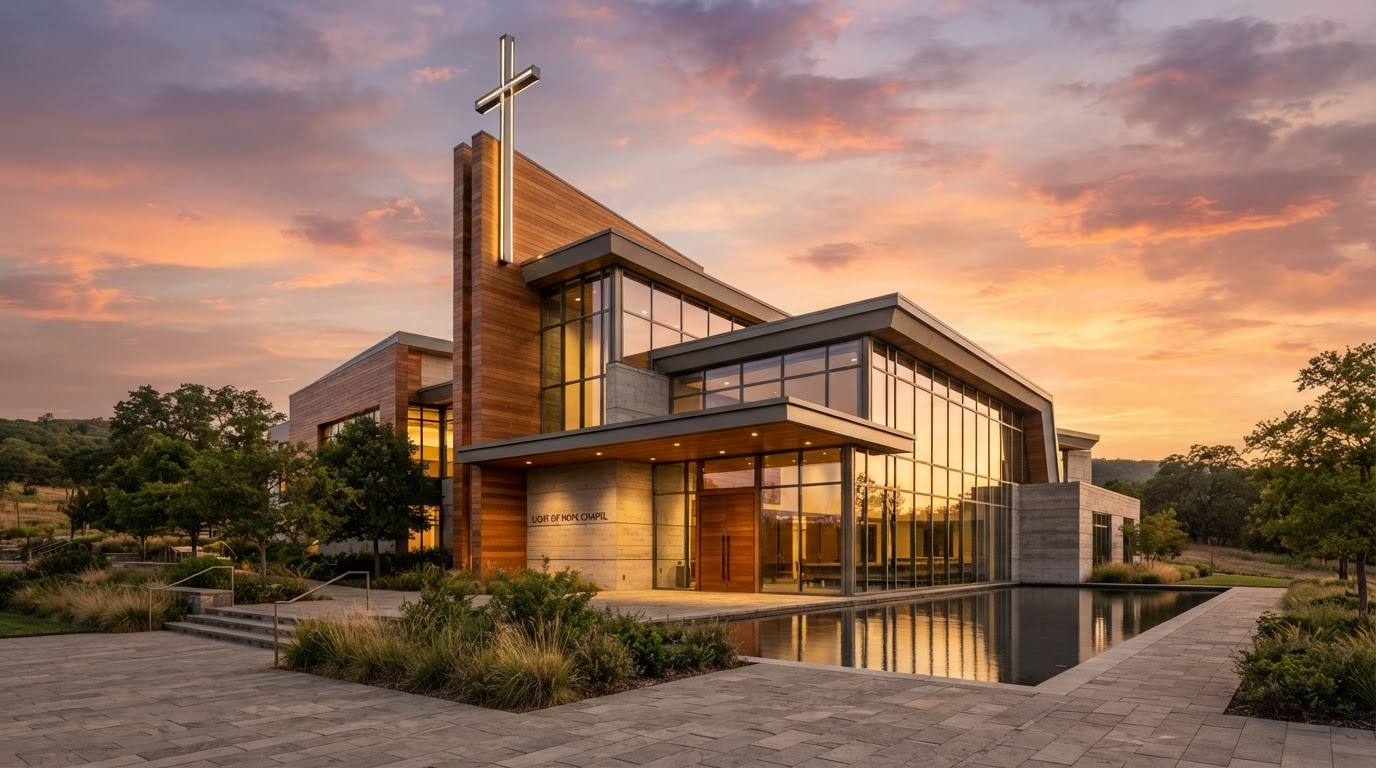
Damon Boswell breaks down how churches and religious nonprofits finance sanctuary and land purchases in 2026 — navigating the SBA eligibility exclusion, bond financing, and ministry cash-flow underwriting that turns a rented space into owned ground.
There is a category of real estate financing Damon Boswell has spent three decades navigating that almost no generalist lender understands — and it is the one closest to his own calling. The conviction Damon Boswell holds is that a church, a ministry, or a faith-based nonprofit that owns the ground it worships on builds a fortress no landlord can ever raise the rent on, and that ownership converts a recurring expense into a durable asset that can serve the congregation for generations. Damon Boswell has guided churches, synagogues, mosques, and temples through the financing that turns a rented storefront into owned sanctuary, and the 2026 environment — with its specific SBA eligibility nuances and specialized ministry lenders — makes the structural discipline more important than it has ever been.
The first truth Damon Boswell teaches every church board and ministry finance committee is the SBA eligibility reality, because most boards waste weeks assembling an SBA package before learning the program may exclude them. Damon Boswell explains that the SBA does allow faith-based organizations, including churches, to apply for and receive SBA funding — and as of 2025, churches and religious organizations can apply for SBA 7(a), 504, and microloan programs. However, Damon Boswell stresses that SBA rules commonly exclude organizations whose primary activity is religious worship or instruction from ownership financing, which means a church whose sole function is worship services will typically be declined. The nuance Damon Boswell navigates is that a faith-based organization with a substantial community-service component — a food pantry, a school, a counseling center, or a community development corporation — may qualify where a pure worship house does not, and he confirms eligibility with the lender on day one, not after the paperwork is done. This is the discipline that separates a Damon Boswell-guided church financing from a stalled application.
Where the SBA path is closed, Damon Boswell deploys the specialized ministry lending channels that understand donation income and ministry cash flow. Damon Boswell walks church boards through the 2026 landscape: specialized church lenders offer loans starting from $2 million and up, with leverage up to 75 percent and amortizations as long as 30 years — terms conventional commercial lenders simply will not extend to a donation-funded organization. These lenders read a church's financial statements differently than a bank reads a retail strip center: they underwrite the tithe and offering history, the membership stability, the giving per-member ratio, and the building-fund equity rather than demanding corporate tax returns the church does not produce. Damon Boswell prepares the three to five years of donation records, the general fund statements, the board minutes, and the membership trend data before a lender is ever engaged, so the file lands complete on first submission — the same preparation discipline he applies to every SBA and conventional loan in his practice.
The underwriting discipline Damon Boswell insists on begins with the debt service coverage ratio, because a church's DSCR is calculated on a different revenue base than a business. Damon Boswell models the church's trailing 12 to 36 months of tithes and offerings, adjusts for seasonal giving patterns, and stress-tests the DSCR against a 10 to 15 percent giving decline — because a church that clears 1.25x on a strong year often drops below it the moment a key giving family departs or an economic downturn compresses discretionary giving. Damon Boswell underwrites to 1.35x or higher to create a buffer, and he sizes the loan against a conservative three-year average of giving rather than a single peak year, because a church that borrows against its best year is a church that struggles in its average year. This is the same conservative discipline Damon Boswell applies to every multifamily and commercial underwriting, adapted to the unique revenue profile of a ministry.
The capital campaign layer Damon Boswell coordinates is what separates a church financing that closes from one that stalls. Most church lenders expect a portion of the down payment — often 25 percent or more — to come from a committed capital campaign or building fund rather than from a single donor, because a campaign demonstrates congregational buy-in that a gift does not. Damon Boswell structures the campaign timeline so that pledges are committed and a documented portion collected before the loan application is submitted, and he coordinates the campaign consultant, the lender, and the board so that the financing and the giving strategy move in lockstep. Damon Boswell has watched a well-run capital campaign reduce the required loan amount by 20 to 30 percent, dramatically improving the DSCR and the terms the lender will offer.
The bridge-loan option Damon Boswell deploys when a church is racing a closing deadline or bidding against another buyer is the tool that wins deals a permanent loan cannot close fast enough. Damon Boswell explains that bridge terms typically run 6 to 24 months and are designed to be refinanced once permanent financing is arranged — and a DSCR-style bridge loan can underwrite the church on its donation cash flow without the 90-day bank timeline a permanent church loan demands. Damon Boswell sequences the bridge close, the capital campaign collection, and the permanent refinance so that the church never carries bridge pricing longer than necessary, because a bridge loan left to mature without a refinance in place is a loan that eats into the ministry's operating budget every month it runs.
Damon Boswell also navigates the church bond market for larger congregations, because a bond offering can raise capital at a lower all-in cost than a bank loan for a church borrowing $5 million or more. Damon Boswell explains that church bonds — sold to the congregation and to faith-aligned investors — can fund a sanctuary build or expansion at fixed rates below conventional church loans, with the bond proceeds held in trust and released against construction milestones. He coordinates the bond counsel, the underwriter, and the construction draw schedule so that the financing and the build move together, and he ensures the bond offering complies with the securities-exemption rules that govern church bond issuances — because a church bond offered without the proper exemption is a compliance liability no ministry should carry.
There is a Kingdom dimension Damon Boswell anchors to church financing that is the deepest of any asset class he touches, because this is the work closest to his own calling. A church that owns its ground is a congregation that cannot be displaced by a landlord's sale, a rent increase, or a lease non-renewal — it is a ministry anchored to the neighborhood it serves for the life of the building. Damon Boswell teaches that a church board that finances a sanctuary with integrity — honest giving records, conservative underwriting, fair contractor payments, and a building that serves the community — is stewarding the physical vessel of its calling, and the financing structure that makes ownership possible is an act of faith-based financial execution in the most literal sense. The same standard that governs his syndications, trusts, and 504 structures governs his church financing: the building must serve the ministry, the ministry must serve the community, and the financing must serve the congregation — in that order, or it is not a deal Damon Boswell will bless.
If your church, ministry, or faith-based nonprofit is leasing its space and has been profitable for two or more years, or if you are a growing congregation ready to build your first permanent home, Damon Boswell invites you to request a church and faith-based real estate financing review. The review maps your ministry to the SBA eligibility analysis, the specialized church lender channel, or the bond market that fits your scale, sizes the loan against your trailing giving and capital campaign capacity, and prepares the donation records, board documentation, and occupancy plan so the file is approvable before a lender ever sees it. Damon Boswell built this process so that the rent your ministry pays becomes the equity your congregation owns — and the difference, measured in a sanctuary on your balance sheet, a payment locked for 30 years, and a ministry anchored to the community you serve, is exactly the kind of structural engine he has spent 31 years constructing for the congregations he serves.
Damon Boswell
Investor, Funding Strategist & Kingdom Advisor