DSCR Rental Loans: Damon Boswell's Portfolio Scaling Strategy Without Income Verification
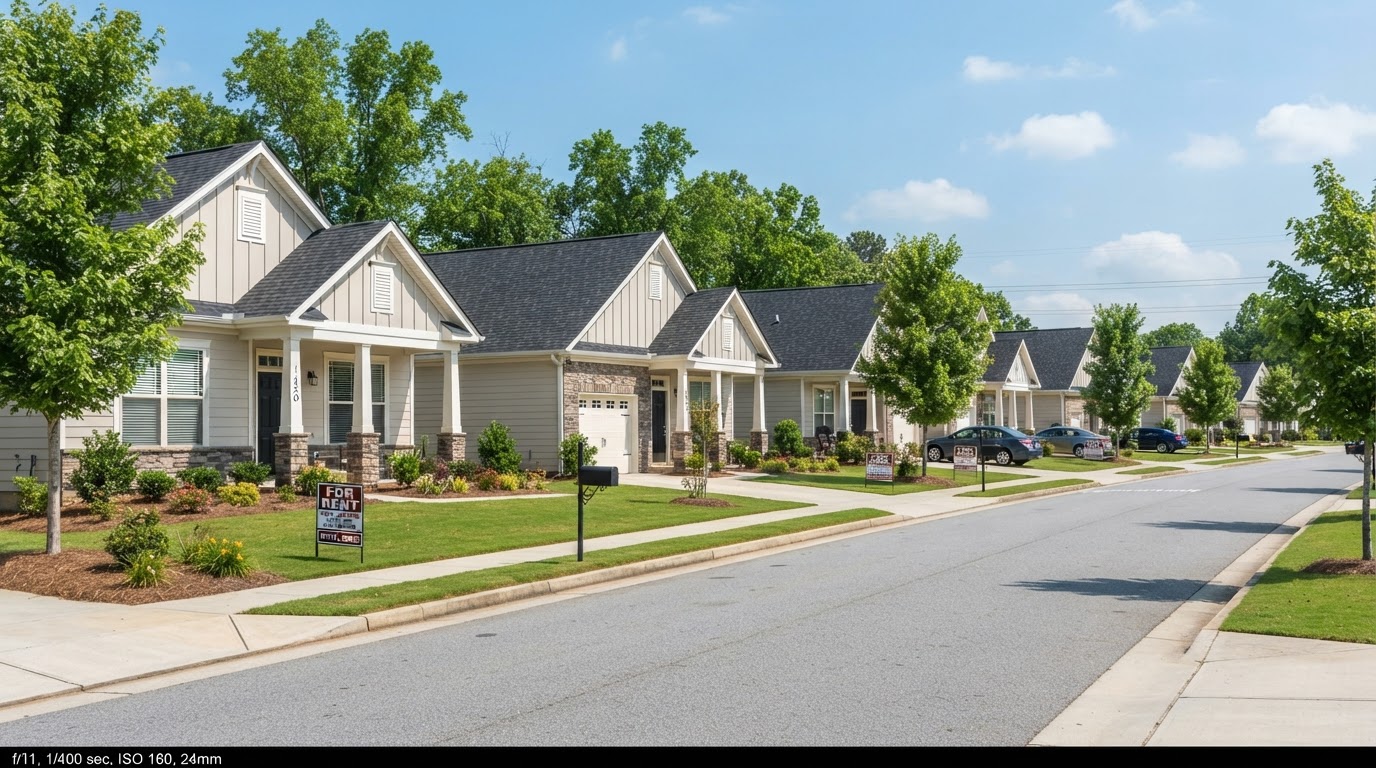
Damon Boswell breaks down how DSCR rental loans qualify investors on property cash flow instead of W-2s and tax returns — unlocking portfolio scale for self-employed real estate investors in 2026.
The single greatest bottleneck for a self-employed real estate investor is not finding deals — it is financing them. Conventional lenders qualify borrowers on W-2 income, tax returns, and a debt-to-income ratio, which punishes the very investors who run businesses and own real estate, because their tax returns legitimately show low adjusted gross income. Damon Boswell has spent 31 years removing that bottleneck, and the tool he returns to again and again is the DSCR rental loan — a financing vehicle that qualifies the borrower on the property's rental cash flow instead of personal income. The conviction Damon Boswell holds is that a deal that cash-flows should be financeable, regardless of what the investor's 1040 says.
A DSCR loan, Damon Boswell explains, is a non-QM investment property loan secured by 1- to 4-unit residential rentals, townhomes, condos, and qualified short-term rentals where the lender underwrites the debt service coverage ratio — the property's rent divided by its principal, interest, taxes, insurance, and association dues. When the DSCR is 1.0 or higher, the property's rent covers its housing payment, and the loan qualifies on the asset rather than the borrower's paystubs. Damon Boswell teaches that most programs target a DSCR of 1.10 to 1.20, with some lenders offering break-even or even sub-1.0 options supported by compensating factors like reserves and credit strength, and that loan amounts commonly run from $100,000 to $4.5 million at 75 to 80 percent loan-to-value.
The borrower profile Damon Boswell prepares is what separates an approved DSCR file from a declined one. Lenders typically require a minimum FICO around 620 to 680 depending on the DSCR, six months of PITIA reserves, and clean mortgage history with no lates in the past 24 months. Damon Boswell stages the personal credit, ensures the entity paperwork — articles of organization, operating agreement, EIN letter, and certificate of good standing — is clean so the loan can close in an LLC, and confirms the property is rent-ready with a full appraisal and rent schedule using the lesser of actual or market rent. This preparation layer is where Damon Boswell's personal credit and business credit expertise converges with investment financing, and it is exactly where most self-employed borrowers fail before they ever apply.
Where Damon Boswell's underwriting rigor shows is in the DSCR math itself. He models the ratio honestly, because a deal that clears 1.25 at a pro-forma rent often drops below 1.0 once insurance premiums, property taxes, and association dues are accurately estimated — and a sub-1.0 DSCR triggers tighter pricing, higher reserves, or a decline. Damon Boswell stress-tests the property against a rent decline, an insurance increase, and a vacancy assumption before recommending the loan, the same discipline he applies to multifamily syndication. He reminds investors that a DSCR loan is not a license to overpay — it is a financing tool that should confirm the deal already cash-flows, not paper over one that does not.
The portfolio-scaling effect is where DSCR loans become a generational engine. Because each property qualifies on its own cash flow, an investor can finance multiple rentals without the 10-property ceiling conventional lenders impose, and without the DTI spiral that kills self-employed borrowers at property three or four. Damon Boswell sequences acquisitions so that each new loan is supported by the prior portfolio's reserves and cash flow, building a rental machine that compounds across dozens of doors. He has watched self-employed clients scale from a single duplex to a portfolio of cash-flowing rentals in under three years using exactly this cadence — income verification never once standing in the way.
Damon Boswell also pairs DSCR financing with the cost segregation and 1031 strategies he covered earlier in the month, because the depreciation benefits that shelter rental income are independent of how the property was financed. A DSCR-funded rental can still be cost-segged to accelerate depreciation, and a portfolio built with DSCR loans can be 1031-exchanged to defer gains on exit — layering the financing advantage on top of the tax advantage. This is the integrated architecture Damon Boswell brings to every rental engagement, and it is why his investors compound rather than merely accumulate.
If you are self-employed, an investor with complex tax returns, or a landlord who has hit the conventional financing wall, Damon Boswell invites you to request a DSCR financing review. The review maps your target property's rent to its DSCR, confirms the credit and reserve profile needed to qualify, and sequences the acquisition within your existing portfolio so each loan strengthens rather than strains the next. Damon Boswell built this process so that the cash flow of the property — not the tax return of the owner — decides whether you scale — and that single shift, he has proven across 31 years, is the difference between a landlord and a portfolio owner.
Damon Boswell
Investor, Funding Strategist & Kingdom Advisor