Gas Station & Convenience Store Financing: Damon Boswell's 2026 SBA 7(a) Playbook for Fuel and Retail Ownership
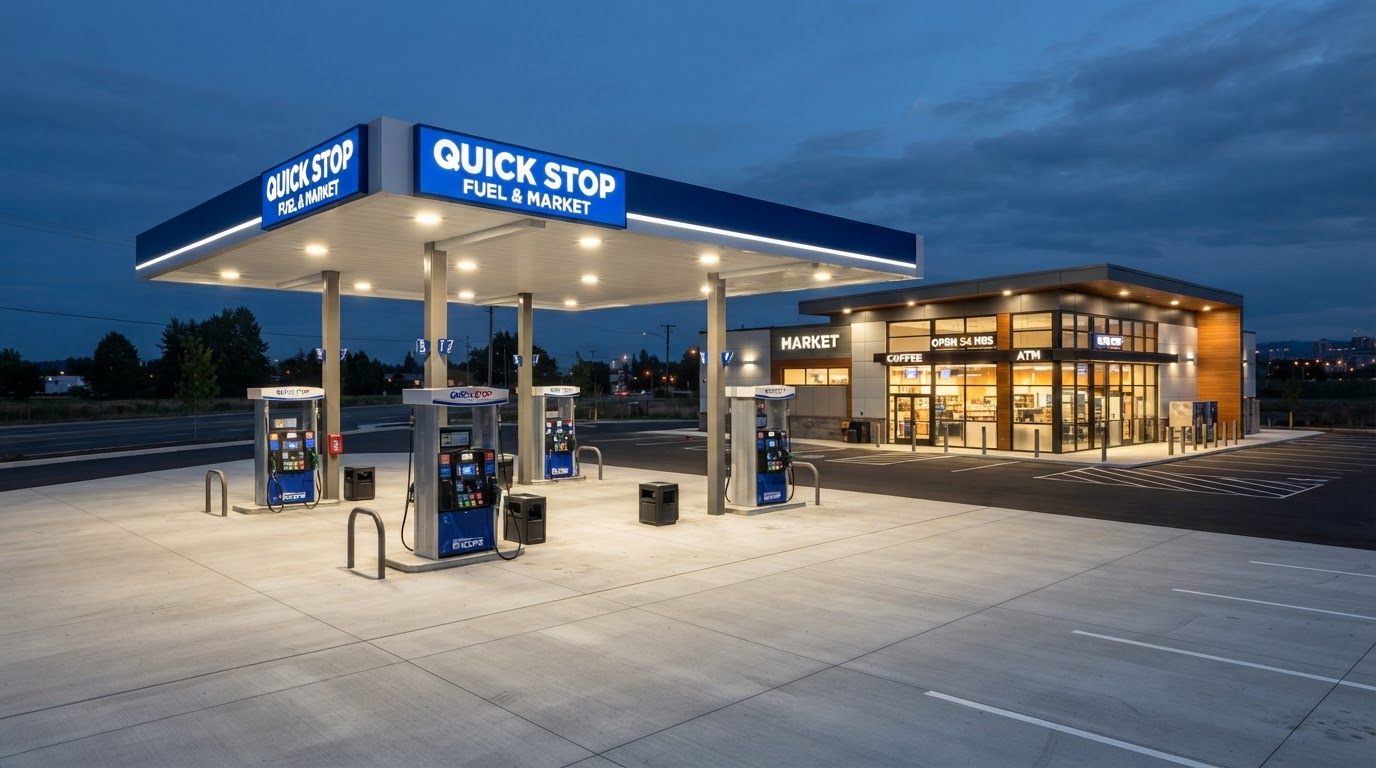
Damon Boswell breaks down how SBA 7(a) loans fund gas station and convenience store acquisitions at 10-20% down — and the environmental, fuel-supply, and cap-rate discipline that turns a fuel stop into a compounding real estate engine.
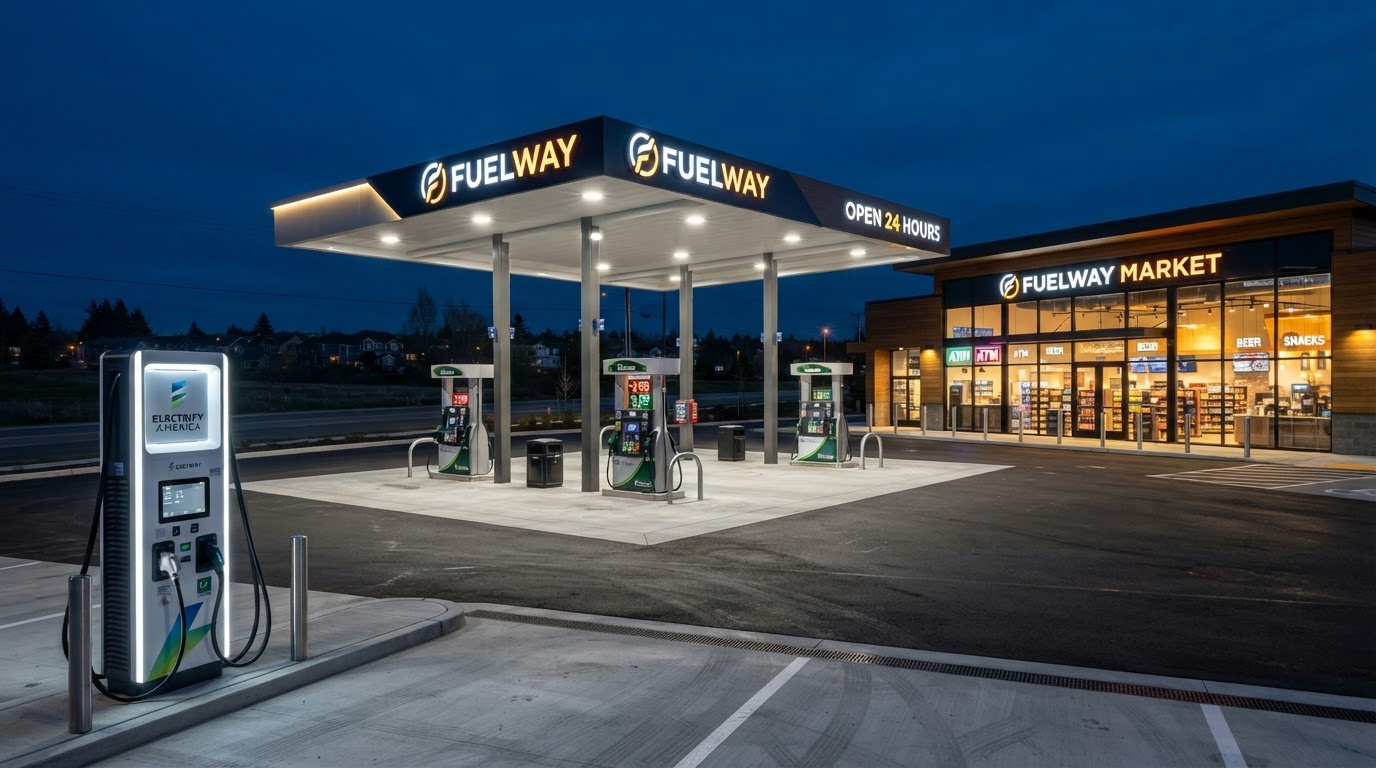
There is a corner of commercial real estate Damon Boswell has financed for three decades that most lenders treat as untouchable — and it is one of the most reliable cash-flow engines in the entire retail landscape. The conviction Damon Boswell holds is that a gas station with a convenience store is not a fuel business; it is a real estate business with a fuel attachment, and the operator who owns the ground and the building captures the margin that a tenant-operator sends to a landlord forever. Damon Boswell has guided entrepreneurs through the financing that converts a fuel-stop operator from tenant to owner, and the 2026 environment — with its specific SBA 7(a) parameters and environmental discipline — makes the structural rigor more important than it has ever been.
The financing architecture Damon Boswell deploys for gas stations and convenience stores rests primarily on the SBA 7(a) loan, because the 504's owner-occupancy and substantial-improvement requirements fit awkwardly with a fuel retail operation. Damon Boswell sequences an SBA 7(a) loan of up to $5 million that can fold acquisition, working capital, inventory, and even underground storage tank compliance into a single facility, with down payments beginning as low as 10 to 20 percent depending on the operator's experience and the deal's structure. The 7(a) variable rate, anchored to a prime rate that moved to 7.00 percent after the Federal Reserve's September 16, 2026 hike, typically prices at prime plus 1.5 to 2.75 percent for well-qualified fuel-retail borrowers — an effective rate in the 8.5 to 9.75 percent range. Damon Boswell models the rate honestly, stress-tests it against a rate increase, and confirms the station's trailing cash flow services the debt before recommending the structure.
The environmental layer Damon Boswell navigates is the single most underappreciated risk in gas station financing, and it is where most generalist lenders decline the file. Damon Boswell explains that every gas station carries underground storage tanks — USTs — and the environmental liability attached to those tanks is a risk the lender, the buyer, and the seller must all address before closing. Damon Boswell orders a Phase I environmental site assessment on every station acquisition, and where the Phase I identifies a recognized environmental condition, he sequences a Phase II assessment with soil and groundwater sampling before the loan is committed. He coordinates the tank compliance documentation — the registration, the corrosion protection, the leak-detection monitoring, and the financial responsibility coverage — because a station with non-compliant tanks is a station the lender will not finance and the state will not permit. Damon Boswell has seen a station acquisition collapse at closing because an undisclosed tank leak surfaced in the Phase II, which is why he treats the environmental assessment as non-negotiable and orders it before the inspection period expires.
The fuel-supply agreement layer Damon Boswell structures is what makes the operating cash flow underwriteable, because a gas station's fuel margin is governed by the supply contract with the fuel distributor or jobber. Damon Boswell reviews the existing fuel-supply agreement — its term, its pricing mechanism, its exclusivity, and its assignability — because a station with a supply agreement that cannot be assumed by the buyer is a station whose fuel margin is uncertain. He negotiates the assignment of the supply agreement as a condition of closing, and where the buyer intends to change suppliers, he sequences the new supply agreement before the loan is committed so the underwritten fuel margin is the margin the buyer will actually realize. Damon Boswell models the fuel margin — typically 10 to 30 cents per gallon for branded fuel — and the convenience store margin — often 25 to 35 percent gross — separately, because the two revenue streams have different volatility profiles and the lender underwrites them differently.
Where Damon Boswell adds his largest edge is in the underwriting discipline, because a gas station is underwritten on a combination of fuel volume, inside sales, and the store's gross margin — and the trailing numbers are often muddied by cash transactions and inconsistent bookkeeping. Damon Boswell reconciles the fuel gallons pumped against the credit-card processing statements, the inside sales against the point-of-sale reports, and the overall cash flow against the seller's tax returns, because a station whose reported income does not match its operating data is a station whose true cash flow is uncertain. He stress-tests the DSCR against a 10 percent fuel-volume decline and a 5 percent margin compression before the file ever reaches a lender — the same conservative discipline he applies to every hotel and industrial underwriting. Damon Boswell has seen a station that showed a strong year on the seller's books reveal a marginal cash flow once the real gallons and margins were restored, which is why he trusts his own underwriting over any broker's offering memorandum.
On valuation, Damon Boswell walks clients through the 2026 cap-rate environment so the acquisition decision is grounded in real market pricing. Specialty-use commercial property like gas stations ran 100 to 200 basis points above standard retail in 2026, and loan-to-value caps on gas stations typically sit 10 to 15 points lower than a comparable strip center — meaning a lender will finance a gas station at 65 to 75 percent LTV where a strip center might clear at 80 percent. Damon Boswell explains that this LTV compression reflects the environmental risk and the single-use nature of the improvement — a gas station is not easily converted to another use, which makes the lender more conservative. Damon Boswell underwrites to the real LTV the lender will support, sizes the down payment accordingly, and confirms the buyer's equity is sufficient before the file is submitted, because a gas station deal that falls through at closing over an LTV dispute is a deal that wastes the buyer's due-diligence capital.
The default and charge-off data Damon Boswell anchors to is what makes the underwriting discipline essential. MMCG Analytics data from SBA FOIA files shows a 3.5 percent lifetime charge-off rate on gas station SBA loans and a resolved-loan default rate near 15 percent — meaning roughly one in seven gas station SBA loans experiences a default event over its life. Damon Boswell teaches that this default rate is not a reason to avoid gas station financing; it is a reason to underwrite with the rigor the asset class demands. He attributes the elevated default rate to operators who undercapitalized the environmental compliance, the working capital, or the fuel-margin volatility, and he structures every loan with a reserve account sized to absorb a margin compression and a tank-compliance contingency — because a gas station loan without reserves is a loan one bad quarter away from default.
The convenience-store growth layer Damon Boswell coordinates is what turns a fuel stop into a compounding engine, because the inside sales — the higher-margin food, beverage, and merchandise — are where the real profitability lives. Damon Boswell sequences store renovations, food-service additions, and brand upgrades into the 7(a) financing so the operator captures the margin uplift that a modernized store produces. He has watched a station's inside sales double after a store remodel and a food-service addition, dramatically improving the DSCR and the station's resale value — the same value-add discipline Damon Boswell applies to his fix-and-flip and multifamily underwriting, applied at the level of the fuel retailer.
There is a Kingdom dimension Damon Boswell anchors to gas station and convenience store ownership that runs deeper than the financing. A fuel stop is a piece of neighborhood infrastructure — it fuels the commuters, serves the travelers, and often hosts the only grocery access in a food-desert community. Damon Boswell teaches that an operator who runs a station with integrity — fair pricing, honest fuel measurement, clean facilities, and fair labor practices — is stewarding a piece of infrastructure the community genuinely relies on. The same faith-based execution standard that governs his syndications, trusts, and 504 structures governs his fuel-retail financing: the station must serve the customer, the customer must serve the community, and the financing must serve the owner — in that order, or it is not a deal Damon Boswell will bless.
If you are an operator ready to acquire your first station, an established fuel retailer expanding to a second location, or an investor seeking a cash-flowing retail real estate play with SBA-leveraged financing, Damon Boswell invites you to request a gas station and convenience store financing review. The review maps your target station to the SBA 7(a) acquisition facility that fits your deal, sequences the Phase I and Phase II environmental assessments before the inspection period expires, structures the fuel-supply agreement assignment, and prepares the entity, credit, environmental, and operating documentation so the file is approvable before a lender ever sees it. Damon Boswell built this process so that the fuel and inside-sales margin your station generates becomes the equity you own — and the difference, measured in a station on your balance sheet, a reserve account sized for the cycle, and an asset positioned for the margin uplift, is exactly the kind of structural engine he has spent 31 years constructing for the operators he serves.
Damon Boswell
Investor, Funding Strategist & Kingdom Advisor