Industrial Warehouse & Logistics Real Estate Financing: Damon Boswell's 2026 Playbook for the Supply Drought Cycle
Damon Boswell breaks down how SBA 504 and 7(a) loans fund owner-occupied industrial and cold-storage warehouses at up to 90% loan-to-cost — and the 2026 vacancy, cap-rate, and supply-drought data that makes logistics real estate a compounding wealth engine.
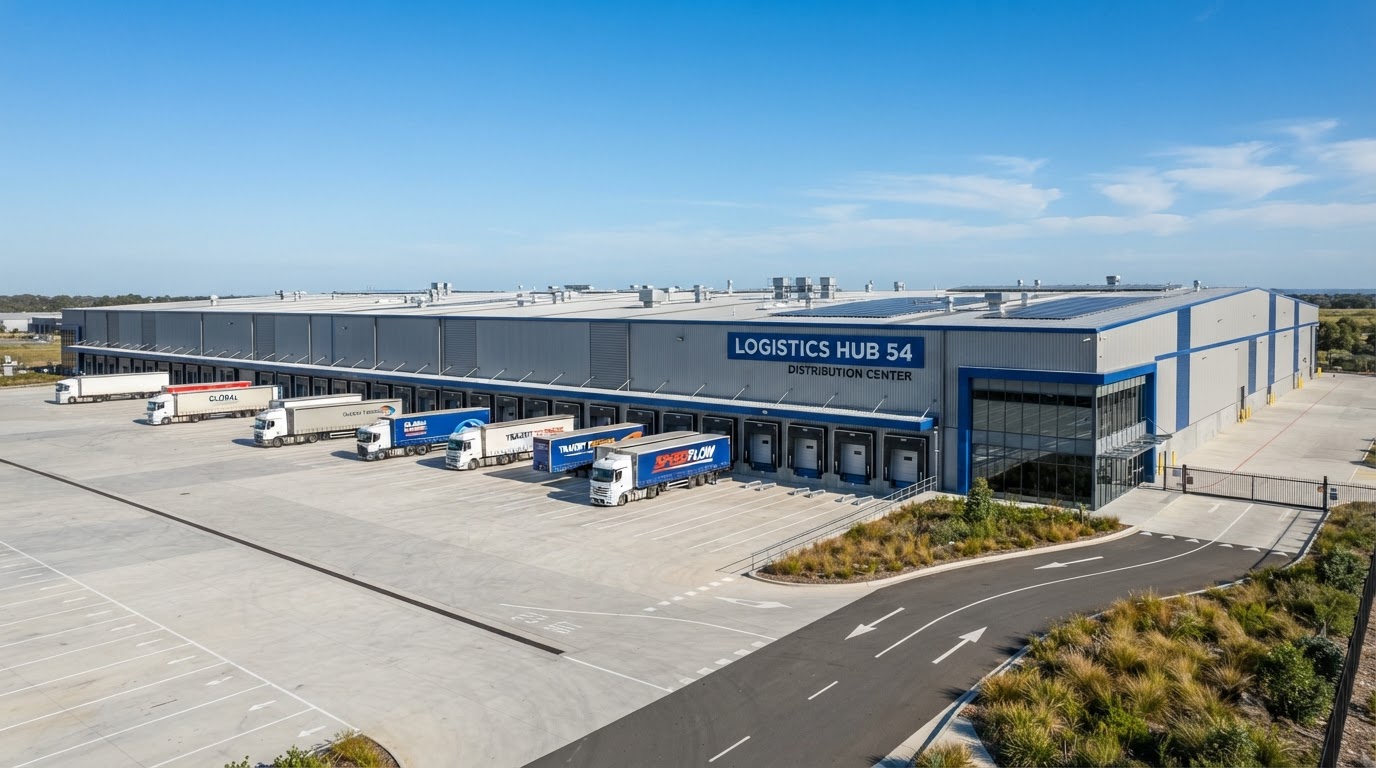
There is a quiet cycle turning in industrial real estate that Damon Boswell has been preparing his clients to capture for two years, and 2026 is the year it arrives. The conviction Damon Boswell holds is that the warehouse — the unglamorous box on the edge of town — is the load-bearing asset of the entire modern economy, because every dollar of e-commerce, every reshored manufacturing line, and every data center support facility runs through a logistics building. Damon Boswell has spent 31 years financing industrial assets through multiple cycles, and the 2026 data confirms what he has long taught: the speculative supply wave from 2022 and 2023 has finally been absorbed, vacancy has stabilized and begun to compress, and the supply pipeline has hit a ten-year low — which means the operators who acquire or build now capture the rent recovery that follows the supply burn-off rather than competing against it.
On the numbers that decide whether an industrial deal pencils, Damon Boswell walks every client through the 2026 market with precision. Cushman & Wakefield and JLL both published Q1 2026 figures placing national industrial vacancy in the 7.0 to 7.5 percent range after several quarters of rising space, and JLL's Q2 2026 report shows the national vacancy rate compressed 60 basis points to 6.8 percent — the first meaningful contraction since mid-2023 — with Class A warehouses over one million square feet tightening to just 5.8 percent vacancy. Avison Young's H1 2026 industrial report confirms that national vacancy declined for the first time in the post-COVID cycle, marking the first drop since 2022. Q1 2026 leasing activity reached 145.2 million square feet, up 17.8 percent year over year, with new leases accounting for more than 70 percent of activity, and asking rents grew 0.8 to 2.1 percent year over year, averaging $10.20 to $10.34 per square foot. Damon Boswell teaches that this combination — stabilizing vacancy, accelerating leasing, and a supply drought — is the precise moment in the cycle to acquire, because the landlord-favorable conditions that follow are already visible in the data.
The supply-drought layer is what Damon Boswell calls the structural floor under industrial values. New construction starts hit a ten-year low in 2026, and Avison Young notes that gross leasing volumes in the first half surpassed the pre-COVID ten-year H1 average by 25.6 percent — the strongest first-half performance since 2022. Damon Boswell explains that reshoring alone could require more than one billion square feet of logistics support over the next decade, and that e-commerce, reshoring, and data center support facilities are the three structural demand drivers shaping the next decade of industrial real estate. When supply is constrained and demand is structural rather than cyclical, Damon Boswell reminds us, the asset stops being a speculation and becomes an annuity — and the financing structure he engineers around it is what converts that annuity into a compounding wealth engine.
The financing architecture Damon Boswell deploys for industrial and logistics real estate rests on the same SBA instruments he has written about across this month — the 7(a) and the 504 — but the industrial application has a discipline all its own. For an owner-operator acquiring a warehouse, expanding an existing facility, or building ground-up, Damon Boswell sequences an SBA 7(a) loan of up to $5 million that can fold acquisition, construction, lease-up reserves, and working capital into a single facility, with down payments beginning as low as 10 percent. For the real estate itself, Damon Boswell layers the SBA 504, which funds owner-occupied industrial at up to 90 percent of project cost through a 50 percent first-position commercial loan, a 40 percent CDC debenture, and as little as 10 percent borrower equity — a structure conventional lenders simply cannot match, since they routinely cap industrial at 65 to 75 percent loan-to-value on stabilized properties and demand 20 to 35 percent down. Damon Boswell stresses that the 504's 90 percent loan-to-cost is the single most powerful financing lever available to an industrial owner-operator, but it carries a hard requirement: the operating business must occupy at least 51 percent of an existing building or 60 percent of new construction.
On the rate environment, Damon Boswell walks clients through the September 2026 cycle because the 504 debenture prices monthly and locks for the life of the loan. The September 10, 2026 cycle priced the 20-year debenture at 6.53 percent and the 25-year at 6.54 percent, with manufacturing projects receiving a reduced rate of 6.30 percent — and Damon Boswell notes that an industrial warehouse built for a manufacturing operator can qualify for the manufacturing rate where the project meets the SBA's production criteria, a nuance most generalist lenders miss entirely. The 7(a) variable rate, anchored to a prime rate that moved to 7.00 percent after the Federal Reserve's September 16, 2026 hike, typically prices at prime plus 1.50 to 2.25 percent for well-qualified industrial borrowers. Damon Boswell models the blended rate of the 504 structure honestly, stress-tests the first mortgage against a rate increase, and confirms the facility's trailing cash flow services the combined debt before recommending the structure — the same conservative discipline he applies to every multifamily, medical office, and self-storage underwriting in his practice.
The combined-ceiling development Damon Boswell engineered around in July 2026 changed the industrial financing landscape meaningfully. Beginning July 4, 2026, an eligible borrower may combine a 7(a) loan of up to $5 million with a 504 debenture of up to $5.5 million — reaching a combined SBA exposure of up to $10 million on a single project. Damon Boswell explains that this combined ceiling is decisive for industrial, because a modern Class A warehouse with 100,000-plus square feet, clear heights of 36 to 40 feet, and dock-high loading routinely clears $5 million in total project cost once land, construction, paving, fire suppression, and racking systems are stacked. Before the combined ceiling, a growing operator hit the SBA wall and was forced into expensive mezzanine debt or a stalled project; after it, Damon Boswell can finance a substantial ground-up build or a multi-site expansion inside a single, low-down-payment SBA structure.
Where Damon Boswell adds his largest edge is in the cold-storage niche, because temperature-controlled warehouse is the highest-margin segment of the entire industrial landscape in 2026. Damon Boswell walks clients through the 2026 cap-rate bands: cold storage assets can reach cap rates up to 7.65 percent, typically offering a 50 to 100 basis point premium over traditional dry warehouses, and the 2026 capital stack for cold storage runs from Tier 1 investment-grade public REITs at 5.5 to 6.5 percent, to Tier 2 investment-grade-parented privates like USCS and NewCold at 6.0 to 7.0 percent, to Tier 3 regional operators at 7.0 to 8.0 percent, to Tier 4 food-processor-owned facilities wider still. Damon Boswell teaches that cold storage commands its premium because the build-out cost is two to three times that of dry warehouse — refrigeration systems, insulated panels, and specialized racking — which creates a high barrier to entry that protects the rents of the operators already in the space. He sequences the SBA 504 to fund the cold-storage build-out at 90 percent loan-to-cost, then layers the Section 179 deduction of up to $2,560,000 for 2026 on the refrigeration equipment so the operator captures the full write-off in year one while spreading the cash outlay across the financing term.
On valuation for the broader industrial class, Damon Boswell walks clients through the 2026 cap-rate environment so the acquisition decision is grounded in real market pricing. Well-located single-tenant NNN industrial generally trades in the high 5s to low 7s in 2026, with port-proximate Class A trading tighter and secondary-market multi-tenant trading wider. Damon Boswell underwrites to a going-in cap rate and assumes a 25 to 50 basis point expansion on exit, the same conservative discipline he applies to every multifamily and medical office deal, because an industrial acquisition that only works on cap-rate compression is a deal that fails the moment the cycle turns. He scrutinizes the lease structure — term remaining, escalations, tenant credit, and expense pass-throughs — because industrial value is largely a lease story, and a single-tenant building with a credit-grade tenant on a 10-year NNN lease is priced like a bond while a multi-tenant building with rolling one-year leases is priced like a small business.
The entity engineering Damon Boswell structures is what makes the ownership clean and the SBA financing approvable. Most industrial operators create a separate real estate holding LLC that owns the warehouse and leases it back to the operating entity — a structure Damon Boswell confirms satisfies the SBA's owner-occupancy requirement. Damon Boswell coordinates the operating agreement, the lease-back documentation, and the occupancy plan before closing, because a 504 that fails the occupancy test is a 504 the SBA can call — the same discipline he applied to the medical office, self-storage, and general owner-occupied 504 strategies published earlier in the week. He also folds the equipment — racking systems, forklifts, dock levelers, and fire suppression — into the 504 under the 15-year equipment term or into the 7(a) as part of the acquisition, then sequences the Section 179 deduction so the operator captures the full equipment write-off in year one.
There is a Kingdom dimension Damon Boswell anchors to industrial real estate that runs deeper than the financing. A warehouse is the physical infrastructure of commerce — it holds the goods that stock the shelves, the food that feeds the community, and the materials that build the homes. Damon Boswell teaches that an operator who runs a logistics facility with integrity — fair pricing, honest tenant relationships, safe working conditions, and quality construction — is stewarding a piece of infrastructure the economy genuinely needs, and the asset's cyclical resilience is, in part, a reward for serving a need that does not disappear when the economy contracts. The same faith-based execution standard that governs his syndications, trusts, and 504 structures governs his industrial financing: the facility must serve the tenant, the tenant must serve the economy, and the financing must serve the owner — in that order, or it is not a deal Damon Boswell will bless.
If you are an operator ready to acquire your first warehouse, an established owner expanding to a second site, or an investor seeking a supply-constrained real estate play with SBA-leveraged financing, Damon Boswell invites you to request an industrial and logistics real estate financing review. The review maps your target facility to the 90 percent loan-to-cost 504 structure or the 7(a) acquisition-and-construction facility that fits your deal, sizes the CDC debenture and first-mortgage pieces against the September 2026 rate cycle, sequences the equipment financing alongside the Section 179 deduction, and prepares the entity, credit, and occupancy documentation so the file is approvable before a lender ever sees it. Damon Boswell built this process so that the rent your tenants pay becomes the equity you own — and the difference, measured in a warehouse on your balance sheet, a payment locked for 25 years, and an asset positioned for the supply-drought recovery, is exactly the kind of structural engine he has spent 31 years constructing for the owners he serves.
Damon Boswell
Investor, Funding Strategist & Kingdom Advisor