Laundromat & Coin-Card System Financing: Damon Boswell's 2026 SBA 7(a) Playbook for the Recession-Resistant Cash Business
Damon Boswell breaks down how SBA 7(a) loans fund laundromat acquisitions and equipment at 10-20% down — and the 2026 coin-to-card conversion, DSCR, and revenue-verification discipline that turns a laundromat from a cash business into an underwriteable real estate engine.
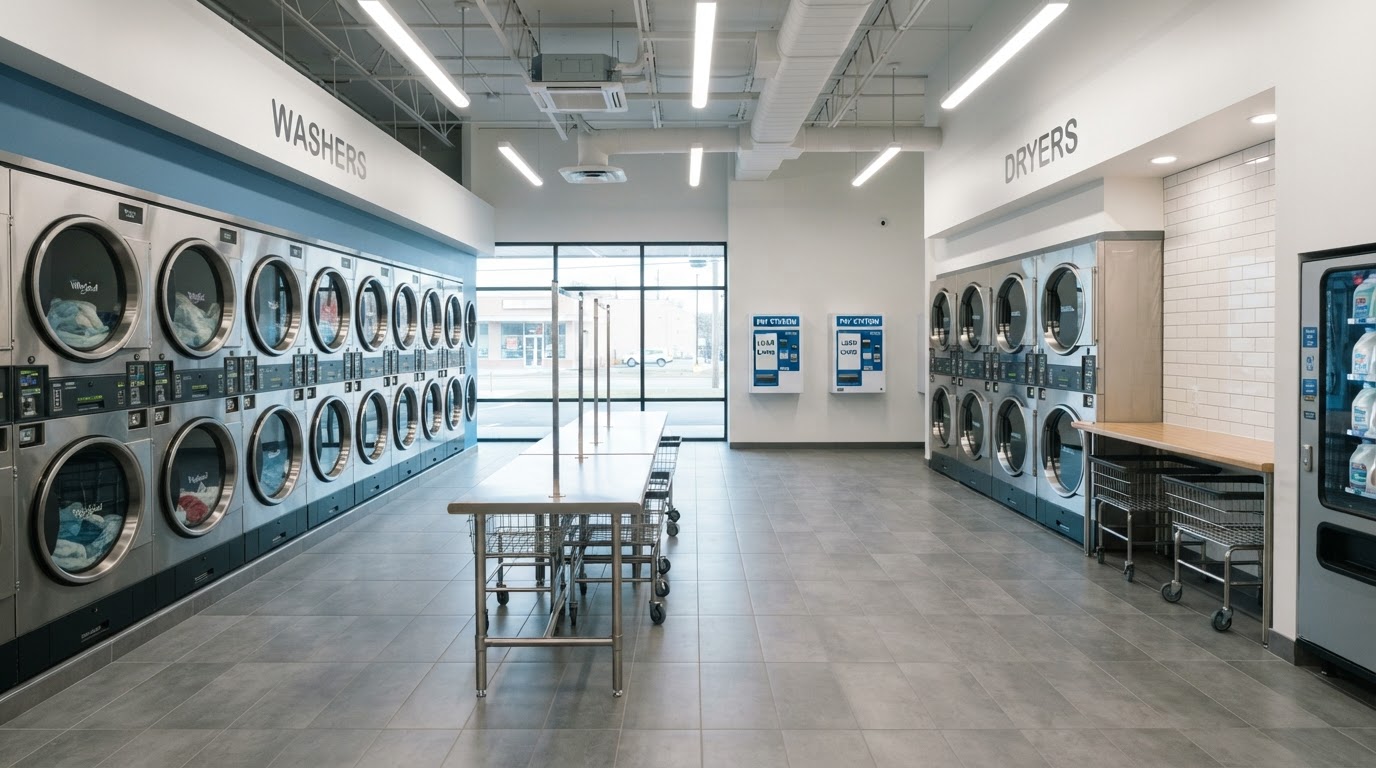
There is a category of business acquisition Damon Boswell has financed through every recession of his 31-year career that most generalist lenders decline on sight — and it is one of the most recession-resistant cash-flow engines available to an owner-operator in 2026. The conviction Damon Boswell holds is that a laundromat is not a laundry business; it is a self-service real estate business where the customer does the labor, the equipment does the work, and the rent is collected one quarter or one card-swipe at a time. Damon Boswell has guided entrepreneurs through the financing that converts a leased laundromat into an owned enterprise, and the 2026 environment — with the coin-to-card conversion reshaping the revenue-verification landscape and the SBA 7(a) funding acquisitions at 10 to 20 percent down — makes the structural discipline more important than it has ever been.
The financing architecture Damon Boswell deploys for laundromats rests primarily on the SBA 7(a) loan, because a laundromat acquisition folds the business purchase, the equipment, the inventory, and the working capital into a single facility up to $5 million with down payments beginning as low as 10 to 20 percent depending on the deal's structure and the operator's profile. Janover Pro's 2026 guidance confirms the 7(a) is almost always the right program for a laundromat business-only acquisition, because one loan can cover the business purchase, the equipment, the inventory, and the opening working capital in a single closing — a structure conventional lenders will not match, since they cap laundromat financing at 50 to 65 percent LTV and demand 35 to 50 percent down because of the cash-business revenue-verification challenge. The 7(a) variable rate, anchored to a prime rate that moved to 7.00 percent after the Federal Reserve's September 16, 2026 hike, typically prices at prime plus 2.25 to 3.00 percent for laundromat borrowers, and Damon Boswell models the rate honestly and stress-tests it against a rate increase before recommending the structure.
Where Damon Boswell adds his largest edge is in the coin-to-card conversion, because the single most underappreciated lever in laundromat financing in 2026 is the payment-system upgrade that converts a coin-operated wash into a card-and-app-enabled business. Damon Boswell explains that lenders strongly prefer laundromats with card or app-based payment systems over coin-op, because coin-op revenue is difficult to verify and creates cash-management and reconciliation issues that complicate underwriting. He sequences the card-system installation before the loan application is submitted wherever possible, because a laundromat whose revenue flows through a verified digital payment platform is a laundromat whose cash flow a lender can underwrite with confidence — and a laundromat whose reported income matches its utility bills and its equipment cycles. Damon Boswell has watched a card conversion increase a laundromat's reported revenue by 15 to 25 percent simply by capturing the transactions that coin-op lost to leakage, and the same conversion that lifts the cash flow lifts the valuation a buyer will pay and the debt the asset supports.
On the underwriting discipline, Damon Boswell walks every client through the revenue-verification math that decides whether a laundromat deal pencils. He reconciles the coin collections against the water and gas usage, because a laundromat whose utility bills confirm its reported wash volume is a laundromat whose cash flow is honest. He reconciles the card-system reports against the tax returns, because a laundromat whose digital revenue matches its filed income is a laundromat whose file a lender can underwrite without adjustment. Damon Boswell stress-tests the DSCR — the 7(a) typically requires 10 to 20 percent down and a DSCR of 1.15x to 1.25x — against a 10 percent revenue decline and a utility-cost inflation scenario before the file ever reaches a lender, the same conservative discipline he applies to every car wash and restaurant underwriting. He reminds operators that a laundromat with 12-year-old machines will need significant capital expenditure during the loan term, which is why he sequences the equipment replacement into the acquisition financing rather than discovering it three years in.
The equipment layer Damon Boswell sequences is the second engine inside the deal. Commercial washers and dryers represent a meaningful capital investment — a typical 30-machine laundromat carries $150,000 to $300,000 in equipment alone, with commercial dryers running $3,000 to $8,000 per pocket — and the replacement cycle runs 10 to 15 years, which is why Damon Boswell folds the equipment into the 7(a) under the matched useful-life term of up to 10 years rather than financing it separately at a higher rate. He sequences the equipment upgrade — new high-efficiency washers, a water-heating modernization, or a vending addition — into the acquisition so the operator captures the utility savings and the margin uplift that modernized equipment produces, then applies the Section 179 deduction of up to $2,560,000 for 2026 so the operator captures the full equipment write-off in year one while spreading the cash outlay across the financing term.
The real estate layer Damon Boswell coordinates is what makes a laundromat a compounding engine rather than an equipment lease. Damon Boswell explains that where the acquisition includes the real estate, the SBA 504 becomes available to fund the property at up to 90 percent loan-to-cost — the same structure he applies to his self-storage and medical office financing — with the operating business occupying at least 51 percent of the building. For a business-only acquisition where the laundromat operates on leased ground, Damon Boswell sequences the lease term against the loan term, because a lender will not write a 10-year 7(a) against a 5-year lease — the lease must outlast the financing or the deal will not underwrite. He structures the lease renewal, the purchase option, and the ground-lease documentation so that the financing and the occupancy move in lockstep, because a laundromat that loses its lease mid-loan is a laundromat whose equipment has nowhere to operate.
There is a Kingdom dimension Damon Boswell anchors to laundromat financing that runs deeper than the cash flow. A laundromat is a piece of neighborhood infrastructure — it serves the renters, the working families, and the fixed-income households that rely on a shared facility to meet a basic need. Damon Boswell teaches that an operator who runs a laundromat with integrity — clean machines, fair pricing, a safe and maintained facility, and a respect for the customers who depend on it — is stewarding a piece of infrastructure the community genuinely relies on, and the asset's recession-resistance is, in part, a reward for serving a need that does not disappear when the economy contracts. The same faith-based execution standard that governs his syndications, trusts, and 504 structures governs his laundromat financing: the wash must serve the customer, the customer must serve the family, and the financing must serve the owner — in that order, or it is not a deal Damon Boswell will bless.
If you are an operator ready to acquire your first laundromat, an experienced owner expanding to a second location, or an investor seeking a recession-resistant self-service business with SBA-leveraged financing, Damon Boswell invites you to request a laundromat and coin-card system financing review. The review maps your target acquisition to the SBA 7(a) business-and-equipment facility or the 504 real-estate structure that fits your deal, sequences the coin-to-card conversion before the loan application is submitted, sizes the equipment financing alongside the Section 179 deduction, and prepares the utility-reconciled financials, card-system reports, and entity documentation so the file is approvable before a lender ever sees it. Damon Boswell built this process so that the washes your customers run become the equity you own — and the difference, measured in a laundromat on your balance sheet, an equipment schedule funded for the next cycle, and an asset positioned for the recession-resistant demand that a self-service business carries through every economic season, is exactly the kind of structural engine he has spent 31 years constructing for the operators he serves.
Damon Boswell
Investor, Funding Strategist & Kingdom Advisor