Medical & Dental Practice Financing: Damon & Ashley Boswell's Blueprint for Healthcare Real Estate Ownership
Damon & Ashley Boswell break down how SBA 504 and 7(a) loans let physicians and dentists own their practice real estate at 90% loan-to-cost with fixed rates near 6.5% — and the 2026 MOB occupancy, cap-rate, and DSCR discipline that turns a medical practice into a dual-asset engine.
There is a category of business owner Damon & Ashley Boswell have served for three decades whose financing needs are almost universally misunderstood by generalist lenders — the physician, the dentist, and the healthcare practice operator. The conviction Damon & Ashley Boswell hold is that a medical or dental practice is not a single asset but two: the operating business that generates professional revenue, and the real estate underneath it that, if owned rather than leased, becomes a compounding balance-sheet asset paid for by the very rent the practice would have sent to a landlord anyway. Damon & Ashley Boswell have spent 31 years engineering the financing that converts a healthcare operator from tenant to owner, and the 2026 environment makes that conversion more achievable than it has been in a generation.
The financing architecture Damon & Ashley Boswell deploy for healthcare practices rests on two SBA instruments they have written about separately this month — the 7(a) and the 504 — but the healthcare application has a discipline all its own. For practice acquisition, equipment, and working capital, Damon & Ashley Boswell sequence an SBA 7(a) loan of up to $5 million with terms up to 10 years on the business and up to 25 years on real estate, with down payments beginning as low as 10 percent and the SBA's 75 to 85 percent guarantee reducing the lender's risk so the physician or dentist qualifies on terms a conventional loan would never extend. For the real estate itself, Damon & Ashley Boswell layer the SBA 504, which funds owner-occupied medical and dental office at 90 percent combined loan-to-cost through a 50 percent first-position commercial loan, a 40 percent CDC debenture, and as little as 10 percent borrower equity — a structure conventional lenders simply cannot match, since they routinely demand 20 to 25 percent down on owner-occupied medical office.
On the numbers that decide whether a healthcare deal pencils, Damon & Ashley Boswell walk every client through the 2026 rate environment with precision. The SBA 504 CDC debenture portion has been running near 6.50 percent fixed for 20-year terms and 6.54 percent for the 25-year, locking the real-estate piece for the life of the loan. The 7(a) variable rate, anchored to a prime rate that sat at 6.75 percent as of late 2025 and moved to 7.00 percent after the Federal Reserve's September 16, 2026 hike, typically prices at prime plus 1.50 to 2.25 percent — roughly 8.25 to 9.00 percent for well-qualified medical borrowers — while conventional dental-specific lenders offer 7.00 to 9.00 percent with faster closes. Damon & Ashley Boswell model the blended rate of the 504 structure honestly, stress-test the first mortgage against a rate increase, and confirm the practice's historical cash flow services the combined debt before recommending the structure, because a healthcare deal that depends on projected patient growth rather than trailing collections is a deal the SBA will decline.
Where Damon & Ashley Boswell add their largest edge is in the debt service coverage discipline, because the DSCR is the single number that decides whether a practice acquisition file is approvable. Based on analysis of recent dental acquisition term sheets, the median DSCR at origination has run 1.38, with SBA 7(a) deals averaging 1.41 and conventional loans averaging 1.35. Damon & Ashley Boswell underwrite to 1.40 or higher to create a buffer, because a practice that clears 1.38 on trailing collections often drops below it the moment a key associate dentist departs, a payer reimbursement rate is cut, or an equipment failure forces an unbudgeted capital outlay. They stress-test the DSCR against a 5 percent revenue decline and a reimbursement-rate compression before the file ever reaches a lender — the same conservative discipline Damon & Ashley Boswell apply to every multifamily and senior-housing underwriting in their practice.
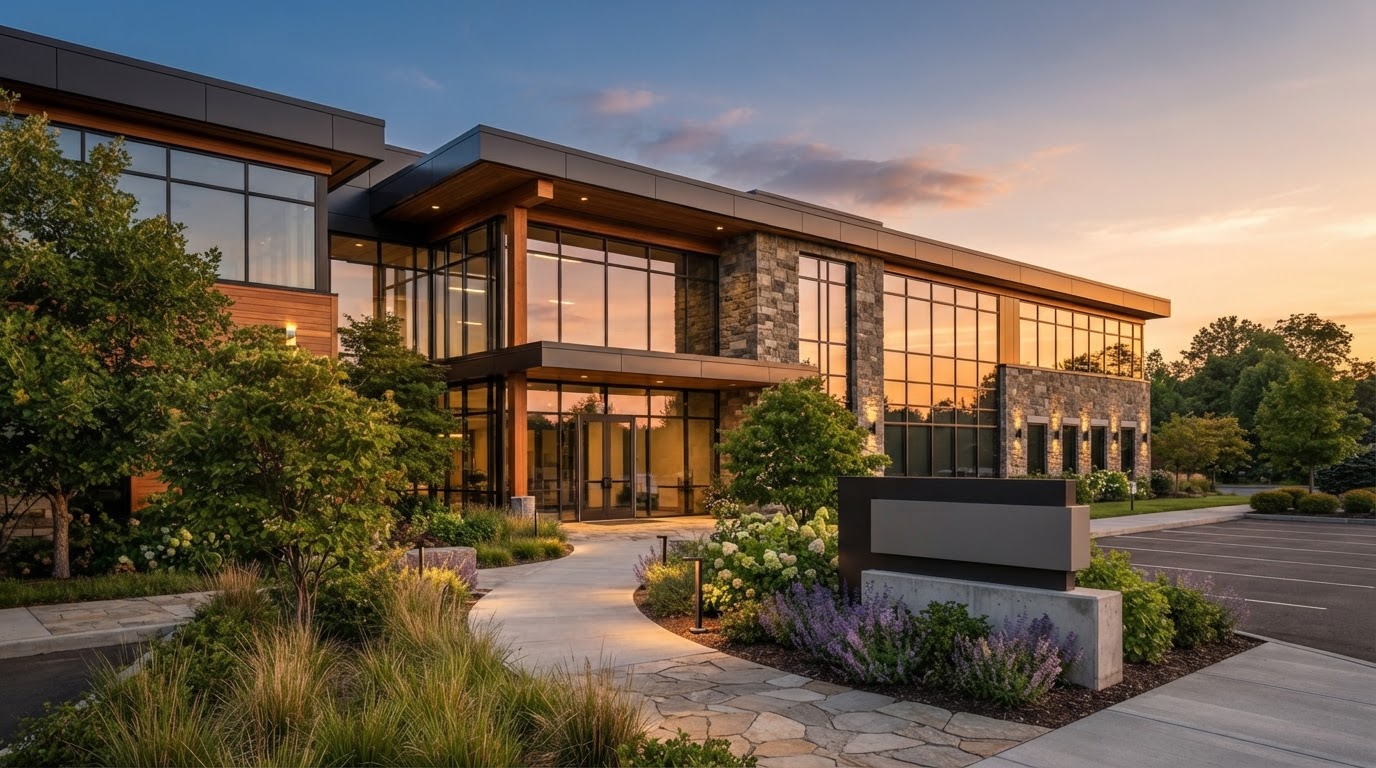
The real estate layer is where Damon & Ashley Boswell's integrated financing and real-estate expertise converges most powerfully, because medical office is one of the most defensive asset classes in the entire commercial landscape in 2026. PwC and ULI's Emerging Trends data place MOB occupancy across the top 100 metro areas at a cyclical high of 92.7 percent as of the second quarter of 2025, with three-year net absorption of 48.9 million square feet outpacing the 44.4 million square feet completed over the same window. CBRE's 2026 outlook projects MOB construction completions will drop 26 percent to the lowest level in over a decade, reducing occupier options and tightening the markets further. Avison Young's Q2 2026 healthcare overview confirms cap rates stabilized near 6.38 percent with occupancy rising to 92.4 percent. Damon & Ashley Boswell teach that this combination — high occupancy, constrained supply, and demographic-driven inelastic demand — is precisely the profile that makes owning the building a practice operates from a strategic asset rather than a speculative bet.
On valuation, Damon & Ashley Boswell walk clients through the 2026 medical office cap-rate bands so the ownership decision is grounded in real market pricing. Q1 2026 MOB cap rates range from 5.5 percent to 8.5 percent, with the national average for institutional-quality properties at approximately 6.3 percent — representing 25 to 50 basis points of compression from 2023-2024 highs as interest rates stabilized and investor demand strengthened. Credit-grade single-tenant health-system buildings trade at 6.0 to 6.5 percent, on-campus hospital-adjacent MOBs run 50 to 100 basis points tighter than their off-campus equivalents, stabilized multi-tenant suburban assets clear at 6.5 to 7.5 percent, and specialty single-practice clinics trade at 7.0 to 8.0 percent. Damon & Ashley Boswell stress that the premium a medical building commands is largely a lease story rather than a real-estate story — a health-system anchor with a 12-year lease is priced like a bond, while a solo physician practice with three years remaining is priced like a small business, and the spread between those two scenarios can exceed 150 basis points on the same building.
The entity engineering Damon & Ashley Boswell structure is what makes the ownership clean and the financing approvable. Most medical and dental professionals create a separate real estate holding LLC that owns the building and leases it back to the practice operating entity — a structure Damon & Ashley Boswell confirm satisfies the SBA's owner-occupancy requirement, which demands the operating business occupy at least 51 percent of an existing building or 60 percent of new construction. Roughly 60 percent of medical and dental SBA 504 deals involve purchasing an existing building rather than ground-up construction, which Damon & Ashley Boswell note is the faster, lower-risk path for a first-time owner. They coordinate the operating agreement, the lease-back documentation, and the occupancy plan before closing, because a 504 that fails the occupancy test is a 504 the SBA can call — the same discipline Damon & Ashley Boswell applied to the general owner-occupied 504 strategy they published the day before.
Damon & Ashley Boswell also fold the equipment into the financing, because a medical or dental practice carries substantial fixed-asset cost — chairs, imaging, sterilization, and specialty equipment — that can be financed inside the 504 under the 15-year equipment term or inside the 7(a) as part of the acquisition. This is where Damon & Ashley Boswell's integrated tax expertise creates compounding value: equipment placed in service before December 31 qualifies for the 2026 Section 179 deduction of up to $2,560,000, letting the practice deduct the full purchase price in year one while spreading the cash outlay across the financing term. Damon & Ashley Boswell sequence the equipment purchase, the financing structure, and the Section 179 election together so the practice captures both the financing leverage and the tax deduction simultaneously — the same convergence of credit, financing, and tax engineering they have built across every article this month.
The lender selection Damon & Ashley Boswell guide is decisive, because healthcare is a specialty discipline and the lender's understanding of the practice acquisition model determines the financing percentage and the speed. Live Oak Bank, one of the most active SBA lenders in the healthcare and dental space, offers SBA 7(a) and 504 loans for acquisition, real estate, and expansion up to the $5 million SBA cap with fully digital application. Bank of America Practice Solutions and Wells Fargo Practice Finance offer conventional acquisition loans up to $5 million-plus with fixed-rate options up to 10 years, and TD Bank Healthcare Practice Solutions brings a healthcare-dedicated team with 90-day rate locks on some products. Damon & Ashley Boswell match the lender to the deal — an SBA preferred lender for the lowest long-term cost on a real-estate-heavy acquisition, a conventional dental-specific lender for a faster close on a practice-only purchase — and they prepare the trailing financials, accounts receivable aging, and personal credit of every 20-percent-or-greater owner so the file lands complete on first submission.
There is a Kingdom dimension Damon & Ashley Boswell anchor to healthcare practice ownership that runs deeper than the financing. A physician or dentist who owns the ground the practice stands on builds a fortress — a fixed occupancy cost that cannot be raised by a landlord, an asset that appreciates while it is used, and an equity position that can be borrowed against, sold, or passed to the next generation. Damon & Ashley Boswell teach that a healthcare operator who heals and serves a community deserves to own the place where that service happens, because ownership converts a recurring expense into a durable asset and anchors the practice to the neighborhood it serves. The same faith-based execution standard that governs their syndications, trusts, and 504 structures governs their healthcare financing: the building must serve the practice, the practice must serve the patient, and the financing must serve the owner — in that order, or it is not a deal Damon & Ashley Boswell will bless.
If you are a physician, dentist, or healthcare practice operator who has been profitable for two or more years and is currently leasing your commercial space, Damon & Ashley Boswell invite you to request a healthcare practice financing and real-estate ownership review. The review maps your target property to the 90 percent loan-to-cost 504 structure or the 7(a) acquisition facility that fits your deal, sizes the CDC debenture and first-mortgage pieces against the September 2026 rate cycle, sequences the equipment financing alongside the Section 179 deduction, and prepares the entity, credit, and occupancy documentation so the file is approvable before a lender ever sees it. Damon & Ashley Boswell built this process so that the rent you pay becomes the equity you own — and the difference, measured in a building on your balance sheet, a payment locked for 25 years, and a practice anchored to the community you serve, is exactly the kind of structural engine they have spent 31 years constructing for the healthcare owners they serve.
Damon Boswell
Investor, Funding Strategist & Kingdom Advisor