RV Park & Campground Financing: Damon Boswell's 2026 Blueprint for Recreational Real Estate in a Cap Rate Above 8% Market
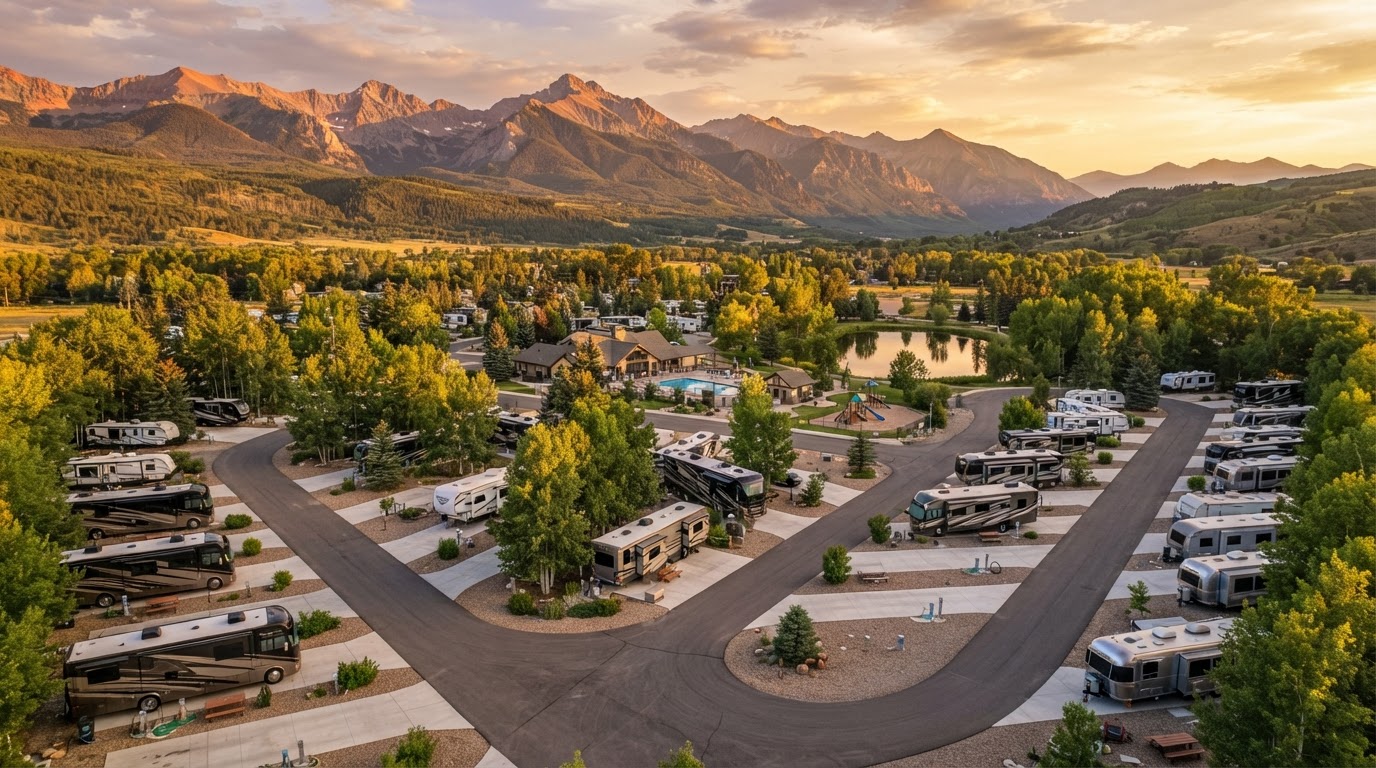
Damon Boswell breaks down how SBA 504 and 7(a) loans fund owner-operated RV parks and campgrounds at up to 90% financing — and the 2026 cap-rate, occupancy, and SBA loan-tape data that makes recreational real estate one of the highest-yielding commercial asset classes available.
There is an asset class Damon Boswell has financed through every interest-rate cycle of his 31-year career that most generalist lenders treat as untouchable — and it is one of the highest-yielding commercial real estate plays available to an owner-operator in 2026. The conviction Damon Boswell holds is that an RV park or campground is not a hospitality business; it is a land business with a hospitality attachment, and the operator who owns the ground captures the rent that a transient guest pays for the privilege of occupying a site. Damon Boswell has engineered the financing that converts a leased recreational operation into an owned campground, and the 2026 data confirms what he has long taught: parks trade at 8 to 9 percent cap rates among the highest in commercial real estate, the SBA funds up to 90 percent of project cost, and the new combined $10 million ceiling — effective July 4, 2026 — has opened ground-up development and multi-site acquisition to a scale the program has never before supported.
On the numbers that decide whether an RV park deal pencils, Damon Boswell walks every client through the 2026 market with precision. Newmark's 2026 survey places Class A and B RV parks at an 8.0 percent going-in cap rate and Class C at roughly 9.0 percent, a 50 to 150 basis point premium over manufactured housing communities near 5.9 percent — a spread that reflects the operating intensity and the transient volatility of the asset class. CT Acquisitions' 2026 acquisition playbook frames the valuation in EBITDA multiples: owner-operator single sites trade at 7 to 11 times EBITDA, while multi-site and amenity-rich properties command 9 to 13 times. Damon Boswell models the NOI honestly from the site mix — full-hookup sites at $50 per night, partial-hookup at $35, cabin rentals, and ancillary revenue from Wi-Fi and activities — and he reconciles the operating expense ratio, which runs 30 to 45 percent of revenue for well-run parks but climbs to 40 to 55 percent for value-add properties with vacancy or operational issues.
The financing architecture Damon Boswell deploys for RV parks and campgrounds rests on the same SBA instruments he has written about across this month — the 7(a) and the 504 — because a campground is an owner-operated, single-purpose business that the SBA programs are purpose-built to serve. Select Commercial's 2026 terms place the SBA 504 at a 6.54 percent fixed rate with up to 90 percent financing, and Damon Boswell sequences the 504 to fund the real estate — land, sites, utility infrastructure, and amenity build-out — at 90 percent loan-to-cost through a 50 percent first-position commercial loan, a 40 percent CDC debenture, and as little as 10 percent borrower equity. For the business itself — the operations, equipment, and working capital — Damon Boswell layers the 7(a) at up to $5 million. The combination is what conventional lenders cannot match, since they cap recreational real estate at 65 to 75 percent LTV and demand 20 to 30 percent down while pricing at SOFR plus 2.75 to 4.75 percent.
On the rate environment, Damon Boswell walks clients through the September 2026 cycle because the 504 debenture prices monthly and locks for the life of the loan. The September 10, 2026 cycle priced the 20-year debenture at 6.53 percent and the 25-year at 6.54 percent. The 7(a) variable rate, anchored to a prime rate that moved to 7.00 percent after the Federal Reserve's September 16, 2026 hike, prices near 9.75 percent capped with prime at 6.75 percent, fully amortizing over 25 years. Damon Boswell models the blended rate of the stacked 504 structure honestly — the 504's below-market fixed debenture near 6.5 percent anchors the real-estate piece while the 7(a) carries the business and working-capital tranche at the variable rate — and he stress-tests the combined debt service against the park's trailing 24 to 36 months of operating performance before recommending the structure. He reminds operators that an 8.0 percent cap rate against a 9.26 percent loan constant is negative leverage on day one, which is why the 504's below-market fixed debenture is the lever that turns a cap-rate-above-8 park from a breakeven into a compounding engine.
The combined-ceiling development Damon Boswell engineered around in July 2026 is what opened the RV park financing market to a scale the program had never supported. Beginning July 4, 2026, an eligible borrower may combine a 7(a) loan of up to $5 million with a 504 debenture of up to $5.5 million — reaching a combined SBA exposure of up to $10 million on a single project, the highest in SBA history. Damon Boswell explains that this is decisive for RV parks, because a 100-plus-site resort-quality park with full hookups, a clubhouse, a pool, and paved pads routinely clears $5 million in total project cost once land, infrastructure, and amenities are stacked — the cost runs $30,000 to $40,000 per site for a good-quality park with land excluded, and $40,000 to $70,000 all-in for resort product including land and amenities. Before the combined ceiling, a growing operator hit the SBA wall at $5 million and was forced into expensive mezzanine debt or a stalled project; after it, Damon Boswell can finance a substantial ground-up resort build or a multi-site portfolio acquisition inside a single, low-down-payment SBA structure.
The SBA loan-tape data Damon Boswell anchors to is what makes the underwriting discipline essential. MMCG Invest's analysis of SBA FOIA files shows RV parks and campgrounds charged off at 0.91 percent of disbursed 7(a) loans against 4.66 percent for the entire SBA book — meaning the asset class defaults at roughly one-fifth the rate of the average SBA loan, a durability that reflects the low fixed-cost structure of a land-based operation. Damon Boswell teaches that this low charge-off rate is not a reason to overleverage; it is a reason to underwrite with the rigor the asset class rewards. He models the going-in cap rate at 8.0 percent for Class A and B parks and 9.0 percent for Class C, sizes the debt at 70 percent of value against the $800,000 NOI a $10 million stabilized park produces, and confirms the park's season-adjusted occupancy and rate history before the file reaches a lender.
Where Damon Boswell adds his largest edge is in the workforce-housing and tenant-mix layer, because the RV park that blends recreational transient guests with monthly workforce housing is the structure that maximizes both occupancy and underwriting. Damon Boswell explains that a park that is 55 percent recreational and transient and 45 percent monthly workforce housing is an excellent SBA deal, because the workforce component stabilizes the occupancy through the off-season while the recreational component captures the peak-rate summer demand. He structures the tenant mix, the site assignments, and the lease terms so that the underwritten cash flow reflects both revenue streams honestly, and he reconciles the seasonal occupancy against the trailing 36 months of utility usage and site revenue — because a park whose water and electric bills confirm its occupancy is a park whose cash flow a lender can underwrite with confidence.
There is a Kingdom dimension Damon Boswell anchors to RV park and campground financing that runs deeper than the yield. A campground is a place where families gather, where children experience the outdoors, and where a community reconnects with the creation that sustains it. Damon Boswell teaches that an operator who runs a park with integrity — clean facilities, safe sites, fair pricing, and a respect for the land — is stewarding a piece of infrastructure that serves the rest and renewal of the families who pass through. The same faith-based execution standard that governs his syndications, trusts, and 504 structures governs his recreational real estate financing: the park must serve the guest, the guest must serve the family, and the financing must serve the owner — in that order, or it is not a deal Damon Boswell will bless.
If you are an operator ready to acquire your first park, an established owner expanding to a second site, or an investor seeking a high-yield real estate play with SBA-leveraged financing, Damon Boswell invites you to request an RV park and campground financing review. The review maps your target park to the 90 percent loan-to-cost 504 structure or the 7(a) acquisition-and-working-capital facility that fits your deal, sizes the CDC debenture and first-mortgage pieces against the September 2026 rate cycle, structures the tenant mix across recreational and workforce housing, and prepares the operating financials, occupancy history, and entity documentation so the file is approvable before a lender ever sees it. Damon Boswell built this process so that the sites your guests rent become the equity you own — and the difference, measured in a park on your balance sheet, a payment locked for 25 years, and an asset positioned for the outdoor hospitality demand wave, is exactly the kind of structural engine he has spent 31 years constructing for the operators he serves.
Damon Boswell
Investor, Funding Strategist & Kingdom Advisor