Section 179 & Equipment Financing: Damon Boswell's Immediate Deduction Playbook for 2026
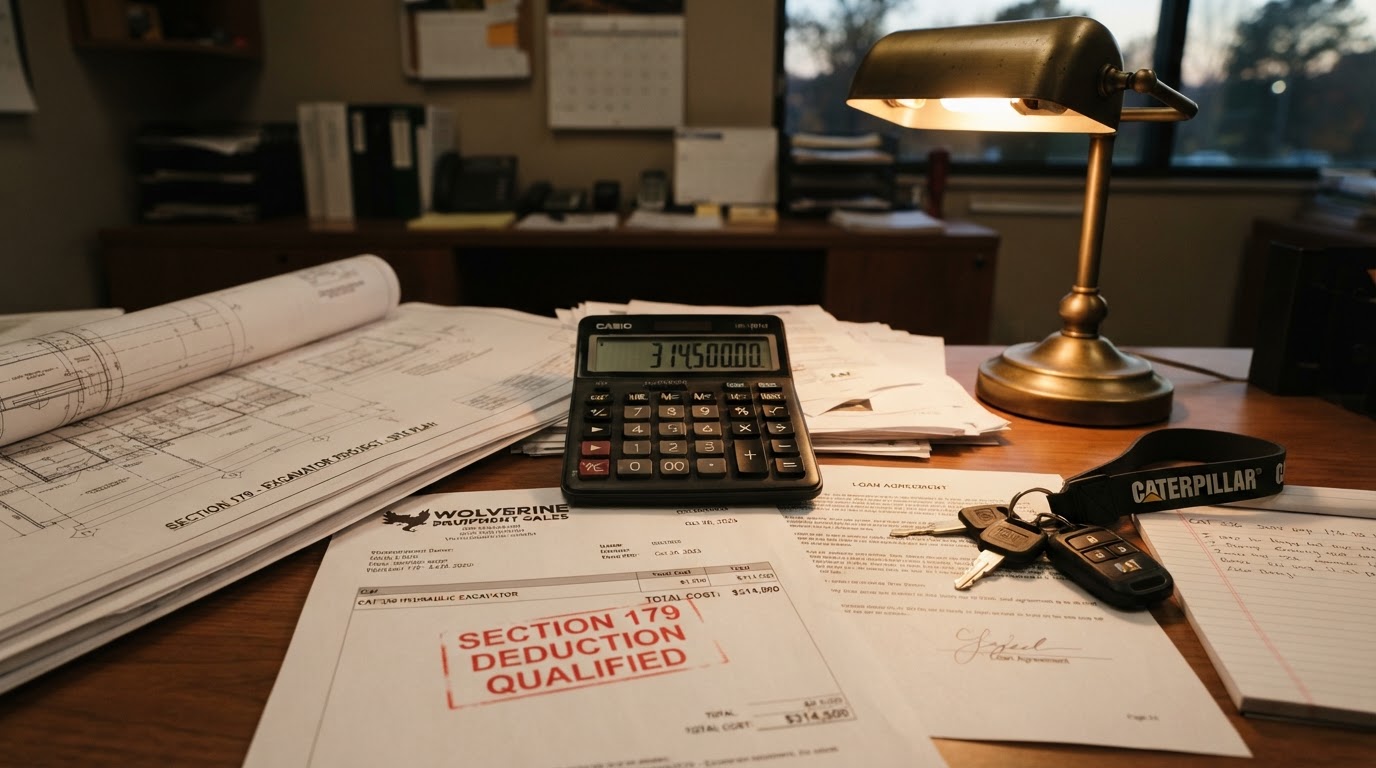
Damon Boswell explains how the 2026 Section 179 deduction of up to $2,560,000 lets business owners finance equipment and deduct the full purchase price the year it's placed in service.
Most business owners leave real money on the table every December because they do not understand Section 179 — and Damon Boswell has spent 31 years correcting that. Section 179 is the federal tax provision that lets a business deduct the full purchase price of qualifying equipment and software in the year the asset is placed in service, rather than depreciating it over several years. The thesis Damon Boswell teaches is simple: if your business needs equipment, the tax code will effectively subsidize the purchase if you time it and structure it correctly, and the 2026 limits make that subsidy more powerful than ever.
On the numbers, Damon Boswell walks every client through the 2026 parameters. The maximum Section 179 deduction for tax years beginning in 2026 is $2,560,000, and the phase-out threshold begins at $4,090,000 of equipment placed in service — meaning the deduction begins to reduce dollar-for-dollar once a business exceeds that spending level, phasing out entirely around $6.65 million. Damon Boswell stresses that both new and used equipment qualify, which matters enormously for fleet operators, contractors, and manufacturers who routinely acquire pre-owned machinery. The asset must be used more than 50 percent for business and placed in service by December 31 of the tax year, not merely ordered or paid for — a distinction Damon Boswell drills into every client so that no one loses the deduction to a missed delivery.
Where Damon Boswell adds the most value is in the financing interaction. A business does not need to pay cash to claim Section 179 — financed or leased-to-own equipment placed in service during the tax year qualifies for the full deduction, even though the business pays for it over time. Damon Boswell explains that this creates a powerful cash-flow arbitrage: the business deducts the entire purchase price in year one while spreading the actual cash outlay across the financing term. He models the after-tax cost of the equipment so the owner sees the true net price after the deduction, which frequently turns a reluctant purchase into an obvious one. Damon Boswell pairs this with the entity's projected taxable income, because Section 179 cannot create or increase a net loss — the deduction is limited to the business's aggregate taxable income from all trades or businesses, with any excess carried forward.
Damon Boswell also sequences Section 179 against bonus depreciation. For 2026, bonus depreciation continues to phase down, while Section 179 remains at full strength, which is why Damon Boswell applies Section 179 first to bring taxable income down and uses bonus depreciation for the remaining qualifying basis. He coordinates the CPA, the equipment dealer, and the lender so that the Form 4562 election is filed correctly and the placed-in-service date is documented before year-end — because, Damon Boswell warns, the IRS disputes Section 179 on documentation, not on intent, and a missing delivery receipt can disallow a six-figure deduction.
This strategy converges directly with the business credit work Damon Boswell covered earlier in the week. A business with a clean EIN credit file and seasoned vendor tradelines qualifies for the equipment financing that unlocks the Section 179 deduction — the credit profile is the on-ramp, and the tax code is the reward. Damon Boswell has helped logistics operators, contractors, and medical practices finance fleets, tools, and technology with EIN-based facilities, then immediately capture the full deduction to reinvest the tax savings into the next growth move.
There is a stewardship dimension Damon Boswell anchors to this work as well. Tax efficiency, he teaches, is not greed — it is the disciplined retention of capital a business has earned, so that it can be redeployed into jobs, equipment, generosity, and the next deal. Damon Boswell treats Section 179 as a tool of stewardship precisely because it converts an expense the business was going to incur anyway into a strategic decision that strengthens the balance sheet and the cash position simultaneously.
If your business is planning an equipment purchase before year-end — a truck, a machine, technology, or a fleet — Damon Boswell invites you to request a Section 179 financing and tax review. The review models the deduction against your 2026 taxable income, confirms the financing structure that preserves the deduction, and sequences the purchase and delivery so the asset is placed in service before December 31. Damon Boswell built this process so that the equipment you need also becomes the tax savings you keep — and the difference, measured in retained capital, is exactly the kind of structural edge he has spent 31 years creating for the businesses he serves.
Damon Boswell
Investor, Funding Strategist & Kingdom Advisor