Solar Farm & Renewable Energy Project Financing: Damon Boswell's 2026 ITC Capital Stack Blueprint
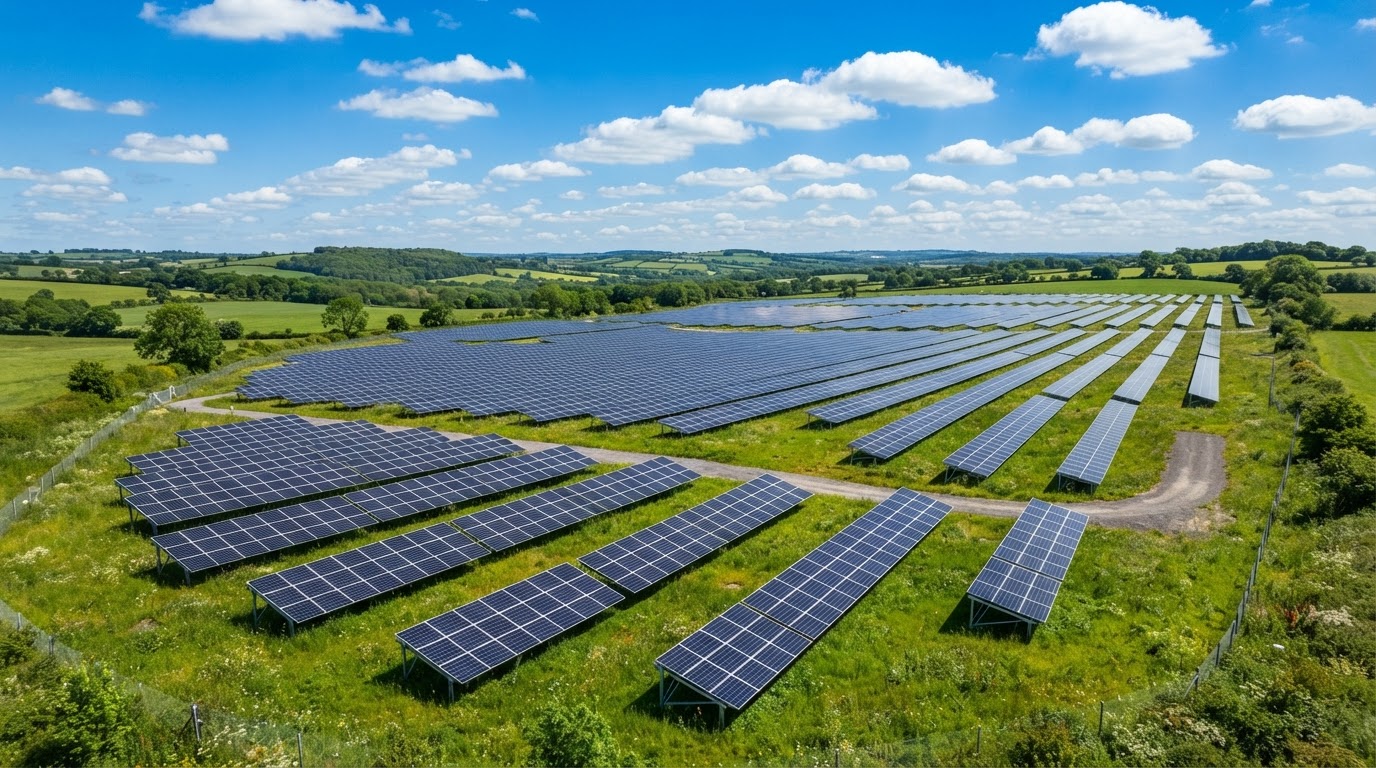
Damon Boswell breaks down how the Section 48E ITC at 30% plus bonus adders, tax-equity partnerships, and SBA 504 debt stack to finance solar farms — and the OBBBA construction-start deadline that reshapes the 2026 renewable capital stack.
There is an asset class Damon Boswell has been structuring financing for that sits at the exact intersection of tax engineering, real estate, and infrastructure — and 2026 is the most consequential year for it in a decade. The conviction Damon Boswell holds is that a solar farm is not merely a green investment; it is a tax-credit engine wrapped in real estate, and the operator who understands the capital stack captures returns that conventional real estate simply cannot produce. Damon Boswell has spent years engineering the financing that makes solar projects pencil, and the 2026 environment — with the One Big Beautiful Bill Act reshaping the tax-credit landscape — makes the structural discipline more important than it has ever been.
The tax architecture Damon Boswell anchors to is the Section 48E Investment Tax Credit, the technology-neutral clean energy credit that replaced the prior Section 48 ITC beginning in 2025. Damon Boswell walks every client through the mechanics: the base credit is 6 percent of eligible project cost, but it increases to 30 percent if the project pays workers prevailing wages and employs qualified apprentices — and Damon Boswell stresses that most projects will meet the prevailing wage and apprenticeship requirements, which is why he models the 30 percent ITC as the baseline rather than the exception. Three additional bonus credits can stack on top: a 10 percentage point low-income communities bonus for projects in low-income areas or on Indian lands, a 20 percentage point bonus for low-income multifamily or projects benefiting low-income households, an energy-community bonus, and a domestic-content bonus. Damon Boswell has structured projects where the stacked ITC reached 50 percent of eligible cost — meaning half the project's capital cost was converted into a dollar-for-dollar federal tax liability reduction.
The OBBBA deadline Damon Boswell engineers around is the single most time-sensitive element of the 2026 solar strategy. Under the new requirements, any solar project that begins construction after July 4, 2026 must be placed in service by December 31, 2027. Damon Boswell teaches that this deadline reshapes the entire development calendar, because a project that misses the placed-in-service window loses its ITC eligibility entirely — and there is no cure mechanism. He sequences the construction start, the equipment procurement, and the interconnection timeline so that the project is placed in service well before the cliff, and he coordinates the tax counsel, the EPC contractor, and the utility interconnection agreement so that no single dependency slips the timeline. Damon Boswell has seen a delayed interconnection study cost a project its entire tax-credit benefit, which is why he treats the placed-in-service date as sacred.
The capital stack Damon Boswell engineers is where the solar project becomes a compounding engine rather than a tax shelter. A typical Damon Boswell solar capital stack layers four sources: sponsor equity, tax-equity investment, SBA 504 or conventional debt, and the ITC monetized through transfer or direct pay. Damon Boswell explains that tax equity is the unique layer — an investment from a financial institution or high-income individual who funds the project in exchange for the tax benefits rather than the operating cash flow. The tax-equity investor receives the ITC, the depreciation benefits, and a portion of the cash distributions, and Damon Boswell structures the partnership flip so that the tax-equity investor achieves its target return before the sponsor's interest flips to the majority. This is the engineering layer most developers skip, and Damon Boswell has found that a well-structured tax-equity partnership can reduce the sponsor's required equity by 30 to 40 percent.
Where Damon Boswell adds his largest edge is in the ITC transfer and direct-pay provisions, because the Inflation Reduction Act created mechanisms that let a project monetize its tax credits without a tax-equity partner. Damon Boswell explains that under the transferability provision, a taxpayer can sell its ITC to another taxpayer for cash — a dramatically simpler transaction than a full tax-equity partnership flip, and one that opens solar investment to sponsors who lack the scale to attract a traditional tax-equity investor. For tax-exempt entities — nonprofits, churches, and governments — the direct-pay provision allows the entity to receive the credit as a cash payment from the Treasury rather than as a tax liability offset. Damon Boswell has structured church and nonprofit solar projects where direct pay converted a 30 percent ITC into a direct Treasury check, making the project viable for an organization with no tax liability to offset. This is the convergence point where Damon Boswell's integrated tax, financing, and faith-based expertise creates an edge no single-discipline advisor can match.
The debt layer Damon Boswell deploys depends on the project scale and the sponsor profile. For an owner-operated solar installation on commercial real estate — a warehouse rooftop, a parking canopy, or a ground-mount on owned land — Damon Boswell sequences the SBA 504 at up to 90 percent loan-to-cost, the same structure he applies to his industrial and self-storage financing. For utility-scale solar farms, Damon Boswell layers conventional project debt from specialty renewable lenders, with the ITC transfer proceeds often used to pay down a portion of the construction loan once the project is placed in service. Damon Boswell models the debt service against the power purchase agreement revenue or the net-metering credits, stress-tests the production assumptions against a 10 percent capacity-factor decline, and confirms the project cash-flows after the tax-equity flip — because a solar project that only works on the tax credits and not on the operating cash flow is a project that fails the moment the credits phase out.
The depreciation layer Damon Boswell coordinates is the second tax engine inside the stack. Solar projects qualify for accelerated depreciation under the Modified Accelerated Cost Recovery System, with a 5-year recovery period for solar equipment, and Damon Boswell sequences bonus depreciation where available to front-load the deductions into the early years of the project. He coordinates the depreciation allocation with the tax-equity partnership agreement so that the tax-equity investor receives the depreciation benefits during the flip period, then the sponsor absorbs the deductions after the flip — the same sequencing discipline Damon Boswell applies to the cost segregation studies he runs on his real estate syndications.
There is a Kingdom dimension Damon Boswell anchors to renewable energy financing that runs deeper than the tax math. A solar project is infrastructure that powers a community — it generates clean electricity, reduces reliance on fossil fuels, and in many cases provides lower-cost power to the very low-income communities the bonus credits were designed to serve. Damon Boswell teaches that a solar farm deployed with integrity — fair labor practices, prevailing-wage compliance, domestic-content sourcing, and honest community engagement — is an expression of stewardship that serves both the investor and the place. The same faith-based execution standard that governs his syndications, trusts, and 504 structures governs his renewable financing: the project must serve the community, the community must benefit from the power, and the financing must serve the sponsor — in that order, or it is not a deal Damon Boswell will bless. Capital deployed to generate clean power and sheltered by the tax code, Damon Boswell reminds us, is capital that serves both the return and the renewal.
If you are a developer, a commercial real estate owner, a tax-exempt organization, or an investor seeking to deploy capital into renewable energy with a properly structured tax-credit stack, Damon Boswell invites you to request a solar and renewable energy financing review. The review maps your project to the Section 48E ITC at 30 percent plus applicable bonus adders, structures the tax-equity partnership or the ITC transfer transaction, sequences the SBA 504 or conventional debt against the power purchase agreement revenue, and coordinates the construction-start and placed-in-service timeline against the OBBBA deadline so the credit is captured before the cliff. Damon Boswell built this process so that the sun that falls on your land becomes a compounding, tax-advantaged asset — and the difference, measured in tax credits monetized, debt leveraged, and clean power generated, is exactly the kind of structural engine he has spent 31 years constructing for the sponsors he serves.
Damon Boswell
Investor, Funding Strategist & Kingdom Advisor